Showing posts with label Traditional Witchcraft. Show all posts

Friday, May 23, 2025

2025 Witchcraft, why we do still doing Covens?

 It's 2025, and we still use the term "coven," but is there a purpose for it?
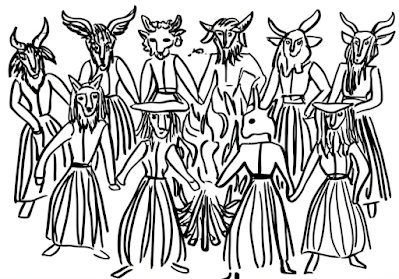

“I swear, many old-school traditional witches are these days living in their Sisyphus era, trying to keep real magic alive and teaching the craft, in a world obsessed with 'unnecessary online discourse', aesthetic altars, and witchy filters.”


As a solitary practitioner who has been part of a couple of covens in the past and at least two online covens for even longer, being part of a coven has enlightened me a lot about their importance and relevance in trying to keep an esoteric tradition alive. At the same time, being part of other covens has made me embrace my solo practice much more.


Solitary vs. Coven

Each incarnation of an esoteric practice has its pros and cons. I risk falling (I honestly hope not) into a long, boring debate about how "important it is to keep a tradition alive," especially on Facebook, which has become a cesspool of toxicity defending the right of a few to maintain spaces filled with transphobia and constant racism.


As a solitary practitioner, you can learn at your own pace. You don't need to gain validation from others, you don't need to justify what you do or don't do in private, and you don't need to sit and be constantly brainwashed whenever you disagree with someone in the group. This freedom allows for a deeper exploration of your beliefs and practices, leading to significant personal growth and self-discovery. You don't need to "keep up" to keep up with everyone else, often accelerating more than necessary in steps where you'd like to wait a little longer. Nor is there any need to become small and quiet to fit the smaller boxes others want for you.


At the same time, as a solitary practitioner, there's much more opportunity for trial and error, and a greater chance that these mistakes will be more frequent. If you don't have step-by-step guidance, you'll likely see the results you expect in spellcasting and mediumship. Because of this, you enter the wormhole of abandoning effective practices due to a lack of results, only to jump into another immediately. This can certainly end up turning you into another one of those "1-centimeter-deep oceans of knowledge" we easily find online with little bios made to impress, like "I'm 22 years old and I'm an alchemist, tarot reader, witch, sorcerer, conjuror, Celtic shaman (whatever that means!!), Wiccan high priest, and Santero." And sometimes more. And if you think I'm exaggerating, this is the literal bio of someone who recently contacted me (a 29-year-old guy from Florida) because they're looking to impress others.


If you enter a practice and feel like there's no practical guidance in the process, it's very easy to get burned out and seek to abandon or change the practice for another at any time. If you don't see results in something, it's very easy to want to move on to the next thing, and ultimately end up not mastering anything.


While solitary practice offers freedom and individuality, it also demands significant commitment, study, and perseverance. The key to a successful solitary practice is to focus on personal growth and development, rather than seeking validation from others or aiming to impress. Remember, your daily practice should reflect your dedication and passion, not a means to gain online popularity or financial gain. This responsibility and commitment can lead to profound personal growth and deepen your practice.


Diving deeper into each one.

While solitary practice is essential because it invites you to discover your potential and your talent without having to conform to the rules and guidelines (many times dated) of other individuals, it also empowers you with the freedom to shape your path. This freedom is the cause of so much unnecessary online discourse; Non-initiated people getting mad cause closed practices don't open for them (as they should be, if it's a closed practice for a reason, and you making a public childish complain about it is the reason why you can't get in the dumbs), or also the reason why we call "professional witches" online charging $600 for "successful witchcraft" courses when these same people don't even have $600 in their bank accounts... What a successful irony.


On the other hand, practicing in a Coven is an experience similar to going to school: a guide to the steps, a list of recommended titles, and a teacher (high priest and high priestess) who teaches you. In general, there's an order of study and practice whose purpose is to lead you to achieve a specific goal.


But to be clear, a Coven is often precisely that: it's a school, not a university. The teacher is there to teach you, as in the textbooks (just as in high school), not to openly discuss any points or invite you to think outside the box and debate ideas (the purpose of which we learn in college and university).


A Coven is a gateway to a tradition. It is equipped with functional gatekeepers who keep its mysteries and secrets hidden from the rest, barring entry to those who don't come to take it seriously or just to pose for photos. But it's important to remember, and as I've mentioned many times before, a Coven will always take the shape and direction of its leader. The leader's beliefs, values, and practices often set the tone for the entire coven, influencing everything from the rituals performed to how members interact.


Regardless of the esoteric tradition the Coven follows, Covens represent traditions. Irrespective of what is written or the purpose of these traditions, a coven will always follow the direction and way of thinking of its coven leader.


Suppose the coven's leader or founder holds a misogynistic, narcissistic, radical feminist, transphobic, or racist view. In that case, it is only a matter of time before the coven reflects this view and way of thinking, regardless of external influences or insights within the coven.


Regardless of the tradition a Coven follows, it's important to remember that witchcraft is not static or unchanging. It is a dynamic, ever-evolving practice, much like the waters of a river that eventually flow into the sea. Each individual who has been part of a Coven, whether they stayed or left, has left their mark on the tradition, influencing its course and evolution. This dynamic nature of witchcraft invites us to be open-minded and adaptable in our practice.


Supaft, a metaphor for the vast body of esoteric knowledge, is like a great ocean, and the rivers are each of these esoteric traditions that seek to keep it running in the form of a Coven. In that case, all these people who have bathed in the river are the multiple members who have entered a Coven, and have either remained in it or have left it. Still, in the end, they all inevitably influence the outcome of how witchcraft itself manifests and takes shape before our eyes.


The Importance of Traditional Coven vs. Solitary Coven

A traditional coven can maintain many different functions. Still, from the outside, it can look like it has just two jobs: keeping their traditions alive and training new witches to carry the tradition to the next generation, so practically, it is the same.


The coven is essential because it allows a seeker to be appropriately prepared and trained without burning out in frustration. Through a coven, seekers meet safely with other seekers like them and learn under guidance. It is like a school that prepares you for training. Afterward, the seeker can either leave the coven and the practice permanently, continue their practice privately, taking into account (or not) what they learned, or continue in the same coven for an extended period.


A coven isn't a 24/7 library, nor a play center where you go to be babysat by the high priest. A coven isn't family and friends who are there for you in your private life, at least not in the conventional sense of what a coven is.


Despite all of the above, a coven's teachings must be intelligently questioned and tested, and there must always be room for free thought and internal discussion, which, depending on the ego or tolerance of the coven leader, may or may not occur.


The Importance of Solitary Practice vs. Coven

Solitary practice, on the other hand, is critical and has its benefits. If you have only practiced witchcraft as part of a coven and never as a solitary witch, the prejudice about it may work against you.


Solo practice should not be questioned, but rather encouraged and motivated. Unless your idea of ​​"traditional" practice is based on the concept of ​​remaining part of a cult where free thought and disagreement are seen as a weakness to be mocked or considered something to be ashamed of, solo practice should be taken seriously. Seekers should be encouraged to practice independently, obviously under their vow of secrecy and silence. To allow them to spread their wings and vision.


What would be the ideal practice?

As someone who has been part of several different in-person Covens and two online Covens for many years, I have also been initiated into multiple different practices that I follow daily, and which, thanks to ample time, I can attend without question. I have found better results in a mixed practice, learning from each Coven what I can learn to enrich my practice, setting aside those lessons that don't fit properly with my way of thinking or seem retrograde. And maintaining my daily rituals as an eclectic and/or solitary witch with good results.


Being part of a Coven or study and practice group will always teach you a lot as a seeker, but daily practice as a solitary witch is further strengthened by commitment and constant creative practice. View the Coven as a center for short- or long-term study, and your daily practice as a true university tailored to you and to strengthen your talents as an individual, not as an agent dependent on a larger group.


Elhoim Leafar. Author of Dream Witchery.


My books!
  • Click Here to grab your copy of 'Manifestation Magic: 21 Rituals, Spells, and Amulets for Abundance, Prosperity, and Wealth'.
  • Click Here to grab your copy of 'The Magical Art of Crafting Charm Bags: 100 Mystical Formulas for Success, Love, Wealth, and Wellbeing'.
  • Click Here to grab your copy of 'Dream Witchery: Folk Magic, Recipes & Spells from South America for Witches & Brujas'.

Thursday, July 25, 2024

Gay Men, Witchcraft, and the Divine: A Fight for Freedom

Hey everyone, here's Elhoim. Without further unnecessary introduction, here's a simple post to read.

Disclaimer: This post was one of those hundreds of old drafts I had not finished because I went off on a ramble; as usual, the original post is from 2011, so I just take it down and rewrite it all again, checking each paragraph one by one.


Nowadays, we're still fighting for the right to connect with something bigger than ourselves. I mean, who would've thought? It's like, we've come so far, but there's still this weird, old-school idea floating around that men, especially gay men, don't belong in the realm of spirituality. It’s like we're stuck in some outdated script where a rigid mold defines our masculinity. And to be honest, it feels pretty wild and weird.


I've always been drawn to the magic of the world. It's in how the sunlight filters through the trees on the patio every morning or how moon cycles can lead, bless, nurture, or even block our different projects. It’s in the feeling of connection to something vast and mysterious. But when I started exploring witchcraft and Brujeria many years ago, I quickly realized that it wasn't exactly a welcoming space for a gay guy.


Leo Louis Martello, Wiccan priest, gay rights activist, and author.
Founding member of the Strega Tradition.

There's this weird and unspoken rule that men, in general, don't belong in witchcraft. And if you're gay? Forget about it. You're an alien, and people constantly will try to make an effort to remind you that you don’t belong. I am an immigrant, so in all honesty, I have experienced the topic of feeling rejected while listening at the front. “But we are not racists”. We’re expected to stick to the sidelines and cheer on the magic makers but never get our hands dirty.


It’s frustrating because, for me, connecting with the divine is about freedom. It's about breaking free from the chains of expectation and embracing who you indeed are. For me, the divine is femininity in all sacredness, in every aspect, and connecting with it/her should feel like embracing a wild love, but instead, people around want to make you feel weird about it. You're constantly judged and pushed into a box; it's hard to feel that freedom sometimes, especially for new seekers. It’s like trying to fly with weights tied to your ankles all the time.


I am an eclectic-solitary practitioner. I can work with a coven but feel more freedom and power working alone. There is no unnecessary noisy judgment in it; it is just me presenting myself to my deities, and I do not need any approval. But when I work in bigger mixed groups with women included, I constantly feel some kind of silent rejection and judgment.


Eddie Buczynski. American Wiccan-witch and archaeologist. Founder of two separate traditions of Wicca:
Welsh Traditionalist Witchcraft and The Minoan Brotherhood.

I see it constantly and ignore it, but then I get seriously distracted thinking of every other man in the room. I understand that not everybody grows up with the same supportive system I found in my mom; she was always there to support me. But imagine a straight man in his 50s-70s coming out of the broom’s closet looking for connections and feeling shame about it. Or younger seekers in their 20s, gay, bisexual, or straight, feeling like this environment, supposedly made to empower and encourage freedom, is just trying to make them feel excluded.

There have been some fantastic gay men out there who are defying the odds and carving out their own space in the spiritual world. They're not afraid to be themselves, to embrace their queerness and their magic. They're inspiring, and they give me hope. But let's be honest: It's still an uphill battle.


It's important to remember that we're not alone. There's a growing community of queer people who are reclaiming their spirituality. We're finding paths, creating rituals, and supporting each other. It's a beautiful thing to witness.


J. Allen Cross, Mexican-Native American Brujo/Witch, is the author of American Brujeria and The Witch's Guide to the Paranormal. His presence in the metaphysical community encouraged other non-typical white straight male practitioners to embrace their power and come out as witches, too.


So, to all the gay men who feel drawn to the magic, I want to say that You belong. Your voice is essential and is just a beautiful projection of the voice of your ancestors. Your magic is valid, potent, and unique. You should never let anyone tell you differently. It's time to break free from expectations and embrace your true power. We should be constantly working to create a world where everyone can explore their spirituality without fear or judgment, without that illness that is the constant searching for validation.


Reclaiming Our Magic as Gay Men


You know, there’s this weird irony in it all. I often listen when they say we're soft, weak, and unable to handle the raw power of nature. But let's be honest, and we've been handling a lot more than our fair share of bullshit. We've been marginalized, silenced, and told who we can and can't be for centuries. I don't know what does if that doesn't build character and resilience.


When I was younger and before I came out of the closet, I constantly remember all these brujas (mom’s colleagues) visiting home and saying over and over that men don't belong in the circle, anyway my mom was and still always is very supportive of having men in the circle to bring as she says in her own words “a more stubborn and rigid energy to support the women’s work”. Also, traditionally, many male spirits of classic spiritualism don't want to possess women’s bodies during rituals, and they have their reasons, which are very reflective of their living times.


Vincent Higginbottam. He is an openly gay witch and the author of 'How Witchcraft Saved My Life,' in which he discusses the struggles of growing up gay and finding strength and support in the path of the Craft.

Our history is filled with stories of queer people who were healers, seers, and spiritual workers. We've been banished to the fringes multiple times, but our magic has never truly disappeared. It's in our blood, in our souls. It's that spark of defiance, that refusal to conform, that ability to see the world through a different lens. And it’s about time we reclaimed it.


We need to create spaces where gay men can explore their spirituality without fear—places where we can share our experiences, learn from each other, and support one another. We need to challenge the stereotypes, break down the barriers, and redefine what it means to be a man, a queer man, and a witch.


It's going to take time, and it won't be easy. There will be setbacks, and there will be haters. But we're stronger together, we're resilient, and we're not going anywhere. So, let's keep shining our light, casting our spells, and building a community where everyone feels welcome. It's time to rewrite the story, to create a new narrative where queer men are celebrated for their magic, not feared or rejected.


So, let's rewrite the script together and collectively. Let's redefine what it means to be a man. Let's embrace our vulnerability, strength, and capacity for connection. The divine is waiting for us, arms wide open. Here below is a breakdown of how traditional notions of masculinity can hinder spiritual growth and how we can embrace a more holistic way of being:


Aspect

How Traditional Masculinity Hinders Spiritual Growth

Alternative: Embracing Vulnerability and Connection

Emotions

Suppressing emotions can lead to disconnection from oneself and others.

Being open and honest about your feelings is a sign of strength.

Connection

Men are often told to be self-sufficient and avoid asking for help.

Spiritual communities offer a space for connection and support.

Healing

Past wounds can make it challenging to connect with something larger than oneself.

Healing is a journey that allows us to open ourselves up to the divine.


Let's talk about this "tough guy" act because we need to. Society tells men to be emotionless robots and never show weakness. But that has always been a recipe for disaster. It cuts us off from our true selves and genuine connection. Imagine trying to connect with something bigger than yourself while holding onto all that baggage. It's like trying to fly with a lead weight strapped to your back. That babe, is definitely not going to happen.


Here's the thing: vulnerability isn't weakness. It's strength. It's about being open and honest about your feelings, fears, and hopes. It's about letting yourself be seen, indeed seen, for who you are. And guess what? That's exactly what spirituality is all about: connection, is a lot about authenticity, and is also a lot about vulnerability.


Being a man doesn't mean going it alone. We all need support and a sense of belonging. Spiritual communities can offer a space to connect with other men more deeply. We can share our experiences, learn from each other, and lift each other. It's about brotherhood, not bravado.


Is it 2024, and is okay to admit we've all been hurt? We've all carried burdens from the past. Those wounds can make it hard to open ourselves up to the divine. But healing is possible. It's a journey, not a destination, but worth taking. Therapy, meditation, and spending time in nature are all tools that can help us heal.


With Kindness & Understanding, Elhoim Leafar.


Read also:
And Click Here to Grab a copy of my book Dream Witchery: Folk Magic, Recipes & Spells from South America for Witches & Brujas' 


Thursday, June 6, 2024

Gatekeepers & The Cult of Personalities in the Craft.

The Cult of Personalities vs. the Craft


Hey you! In 2021, I wrote another post, Self-Initiations and New Traditions, which became one of the most popular posts on this blog. Thinking recently about it, I wrote this other one as a follow-up to the conversation.

The kind of posts I made that make every racist get mad.


Let's talk about the elephant in the coven room, the state of witchcraft covens today. Here's the thing: Gatekeepers aren't the enemy. They're the guardians who ensure the craft's sanctity stays in the right hands. It's the performance of gatekeeping that grates. Those public tantrums thrown by those denied entry? They're precisely why we need discernment. 

A gatekeeper is a loyal, trained protector of the secrets of a path, a guardian of the realm's doors. They are the assigned guardians of the craft in every path, like a mother protecting the most precious thing she has, her children, against bullies who ask how to cause them any damage.

A gatekeeper is the last resourceful tool to protect the real Craft. Especially in these times where kids read half a witchcraft book and half a Wikipedia article and end up making a 60-to-90-second TikTok video about the rituals that black people and descendants of slaves have done. To protect for decades, they have performed these rituals to protect their descendants against the oppressive hands of the colonizers and slavers. These are taken, dismantled, deconstructed, criticized, and taken out of context in a 60-to 90-second animated video with a pop song in the background.

To know more about this first topic, you can CLICK HERE to read my post 'Why are Gatekeepers so Important in Witchcraft'.


Ego-driving Coven.

The real problem lies deeper, festering in many established traditions' hearts. It's the insidious disease of ego-driven competition. These traditions are locked in a never-ending contest for relevance, a desperate scramble for external validation. Instead of nurturing new witches, they become talent scouts for ego-massaging minions. Dissenting voices are immediately silenced, and individuality 'should be' extinguished. 

The result? Covens morph into personality cults. Blind obedience reigns supreme, and critical thought is banished. The deification of the leader replaces devotion to the pantheon. Coven gatherings become echo chambers devoid of genuine exploration.

While I may not like the term "tradition" slapped on overnight creations, the need for fresh paths is undeniable. The spirit of the craft craves evolution, just like everything else in the cosmos. 

But here's my bone to pick: using the word "tradition" is a slap in the face to those who've spent generations safeguarding the craft. It's a lie peddled to starry-eyed seekers. This isn't some ancient lineage passed down through whispered secrets. It's a soulless, mass-produced brand of witchcraft churned out by entrepreneurial opportunists. Forget nights of practice under the moon; this is "Witchcraft for Dummies" packaged for profit.

If my husband, who does not practice witchcraft as regularly as I do and does not belong to any coven, decided to participate and create with me our own path (Another unnecessary modern tradition of witchcraft), I am not saying that we are going to do it. The correct thing would be to say, "This new path that we have created together is based on X, Y, and Z". 

A typical red flag that is easy to identify when people just want to create a cult is when they strive to make it as relevant as possible. As if my husband and I said, "his ten years of practice, and my 30 years of practice, added to the years of practice of our first members equals more than 100 years of experience", which is a Big No!. We do not have a combined 100 years of experience; experience is not something you add and multiply like this as if it were ounces of water that you add to a jar. 

These "organized paths" often devolve into cults fueled by the leader's insatiable ego. Red flags abound,  the biggest being the overnight creation masquerading as a legacy. These are manufactured mysteries, not the organic product of generations of practice.


The Real New Paths

However, let's paint all new paths with a different brush. Those born from genuine desire, from a yearning for something more profound, more magical, these paths are the antidote. They won't seek validation from the old guard. They'll cultivate their own mysteries and guardians if they're rooted in authentic power and connection. The cycle will repeat, and that's okay. The craft, like nature itself, thrives on change.

So, let's move beyond the old and new cult mentality. Let's cultivate a space for genuine exploration, fostering unique voices. Let the craft evolve organically; perhaps, we'll rediscover the magic that binds us all.

Now, let's delve deeper into this rabbit hole. We exposed the ego wars and the manufactured mysteries, but the question remains: What does a healthy coven look like?. Is it some utopian ideal, or can we cultivate it here and now?

Here's my personal vision. I will call this the 'Elhoim's impossible silly vision' (because I can...).

A coven built on the foundation of mutual respect.  A coven where diverse experiences and perspectives are not just tolerated but celebrated. Imagine a space where fiery debates coexist with shared rituals, where questioning authority is seen as a sign of a curious mind, not a rebellious spirit.

This coven wouldn't be a pressure cooker for conformity. It would be a hotbed* of creativity, encouraging each member to explore their unique magical path within the coven's broader framework. Think of it as a constellation, individual stars shining brightly, yet undeniably part of a larger, magnificent whole.

*I just learned the word hotbed days ago, and you can not imagine how excited I was to use it. Lol.

Forget about leaders who lord their knowledge over everyone. In this coven, we'd share what we know and help each other grow. We wouldn't be some drill sergeant barking orders but more like friends coaching each other on the magical journey. Picture this: coven leaders who see their role as keeping the magic alive, not snuffing it out with control. 

Magic shouldn't always be this dark, egocentric, highly academic-serious thing. We should be able to laugh together, share stories, and have fun with ourselves occasionally. When you try a new spell, it goes hilariously wrong? That's the kind of coven I dream of, one that celebrates every win, big or small, with roaring laughter and genuine camaraderie. 

This wouldn't be some exclusive club with velvet blue and black ropes and secret handshakes. This would be a welcoming space, open arms outstretched to anyone genuinely drawn to the craft. Imagine a coven that sees the spark in newcomers' eyes and offers guidance instead of constant judgment. A coven focused on making you a better, more capacited witch, but also a better and more responsible human being. 

This is a dream, a vision I have shimmering on the horizon. But that's what gets me fired up, you know? The chance to create something new, something that goes beyond the petty squabbles and ego trips that plague the witchy scene these days. 

So, let's be the change we want to see. Let's ditch the "this is the only way" mentality and build dynamic, inclusive, and overflowing with genuine magic covens. After all, the future of witchcraft isn't with self-proclaimed gatekeepers or narcissistic leaders. It's with the dreamers, creators, and folks who dare to break the mold and weave their unique brand of magic.

The Need for the New.

One of the biggest problems that I assume happened to people trying to join covens these days, or at least from my own experience just talking with people all the time, is that covens these days feel more like a judgmental space where you are going to sit to be bullied or dismissed, where you are going to get cut to fit, where probably the goddess or god of the pantheon drives you and call you to cause they see in you some authentic, powerful piece of magic that could be helpful in their tradition, and immediately you sit down you should be cut and transformed, not always into something bigger but into something smaller to fit, and not for the pantheon, but for the members who can not tolerate authenticity and power they can not control.

Although this has not been my personal experience in any other coven, it is expected that for some reason - perhaps because I try to be a sociable person - I end up in conversations with different people looking to associate or join with one coven or another, and their experiences end up being somewhat bitter and frustrating. And most of the time, it is due to the same reasons, this kinda ego-driven narcissistic god-complex from people trying to treat others in the most unkind way, dismissing all their true potential entirely just to not admit 'maybe our pantheon sent this person to teach us something, or to teach me something I should do better'.

And that's the thing with ego-driving people, they will never admit their mistakes or opportunities for change, and because of that, their traditions can quickly end at any moment, which again, they make about themselves, not rightly assuming 'Perhaps this is the time to change, to not let the secrets of tradition be lost in time', many times the ego-maniacal response of these people ends up being 'we will then be the last', because for them it is more important to let die the garden due to lack of water and changes in plant care, than admitting that a new gardener can bring a different and more practical experience and points of view.


Xxo, Elhoim Leafar. Author of 'Manifestation Magic' and 'Dream Witchery'.


Read also:
And Click Here to Grab a copy of my book Dream Witchery: Folk Magic, Recipes & Spells from South America for Witches & Brujas'

The Importance of Gatekeepers in Witchcraft. And why they are also not Important for You.

Gatekeepers in Witchcraft

(I was writing this one for a book in 2017, but in all honesty, it was too severe for my own work)


Hey, Witch, there is a very livid discussion about gatekeeping in witchcraft. And like everything in life, there are two sides. The side of those who have been formally trained, tested, and initiated into certain specific paths of witchcraft (Wicca, Santeria, Candomble, etc...) who have spent years studying these mysterious secrets and holding onto the secrets to pass them on to the next generation, who primarily support the concept of gatekeepers.

There exists an opposite side made by those who have yet to be formally trained and initiated. Because their only connection to these esoteric paths is through the internet and books, they can easily assume that 'outside of all meritocracy,' they should have equal access to these mysteries and secrets.

Gatekeeping in Witchcraft: A Necessary Evil?

The concept of gatekeeping in the metaphysical and witchcraft community is complex and often contentious. While many criticize it as exclusionary and elitist, gatekeeping plays a crucial role in safeguarding the sacredness and traditions of the craft.

Protecting the Sacred.

At its core, Witchcraft is a practice steeped in history, tradition, and often, secrecy. Many rituals and practices involve powerful energies and require understanding and respect to wield them safely and responsibly. Gatekeepers act as guardians of this knowledge, ensuring it doesn't fall into the wrong hands or is misused for malicious purposes.

Preventing Misappropriation.

The rise of social media has led to a surge of superficial engagement with witchcraft. Some individuals, driven by the desire for attention or profit, exploit the craft's aesthetics and symbolism without understanding its deeper meaning or respecting its traditions. Gatekeeping helps prevent the trivialization and commercialization of these sacred practices.

Maintaining Lineage and Authenticity.

Witchcraft traditions are often passed down through lineages and initiatory practices. Gatekeepers ensure that knowledge is transmitted responsibly and accurately, preserving the integrity and authenticity of the craft. They act as mentors and guides, helping newcomers navigate the complexities of the practice while safeguarding its core principles.

Understanding the Balance.

It's important to acknowledge that gatekeeping can sometimes be misused to create unnecessary barriers or perpetuate a sense of elitism. However, the core function of protecting the sacredness and traditions of the craft remains vital.

Finding the Right Approach.

The key lies in striking a balance between responsible gatekeeping and fostering inclusivity. This can be achieved through:

Mentorship and guidance.

Experienced practitioners can support newcomers by providing resources and guidance while ensuring they understand the responsibility of wielding magical power.

Discernment and assessment.

Gatekeeping shouldn't be about arbitrary exclusion but about assessing an individual's genuine interest, commitment, and respect for the craft.

Openness to diverse perspectives.

The witchcraft community should be open to diverse perspectives and experiences while still upholding core values and traditions.

By acknowledging the importance of gatekeeping while striving for a more inclusive and responsible approach, we can ensure that the sacredness and traditions of witchcraft are preserved for future generations.


The Pivotal Role of the Gatekeeper (What many people choose to conveniently forget)

The debate around gatekeeping in the witchcraft community highlights a crucial tension between inclusivity and the need to safeguard the craft's sacredness and traditions. While some see gatekeepers as elitist and exclusionary, their role is often misunderstood.

The Gatekeeper's Responsibilities;

Protecting the Sacred.
Gatekeepers are guardians of powerful knowledge and practices, ensuring they are not misused or exploited for malicious purposes.
Preserving Traditions.
They safeguard the integrity and authenticity of witchcraft lineages and practices, ensuring knowledge is transmitted accurately and responsibly.
Preventing Misappropriation.
They act as a barrier against the trivialization and commercialization of the craft, preventing superficial engagement and disrespectful appropriation.

Again:
Gatekeeping plays a pivotal role in ensuring the continued integrity and respect for witchcraft's sacredness. By balancing responsible gatekeeping and inclusivity, we can create a thriving community that preserves the traditions and empowers future practitioners.


Holiday Magickal Rituals

For the Holiday Season: 13 Magical Elements I Keep in Every Room to Activate Holiday Abundance The holiday season brings a profound shift in...