Tuesday, December 7, 2021

The Magic of Birthday!!

Birthday Ritual

My Birthday happens just one day before the end of the year, so I have gotten used to celebrating both every year, and unlike what many expect for "practicality", I keep them separate.

Each year we close a sacred cycle of life, a cycle of learning and experiences, as well as each year we open a new cycle and that is a reason for gratitude and celebration. That is why every year we deserve to take a moment to perform our brief Birthday ritual because we deserve it because you are worth it.

This has been a year to focus on meditation and healing as a collective and as a group, it has also been a year of reflection, assertiveness, and personal commitment. Let's not forget that Birthday is a personal reset, a moment of rebooting and re-connection with ourselves. Your Birthday is a sacred and unique moment in which you start another lap around the sun full of astrological events, many of which will only occur once.

The ritual of completion for your birthday can be worked in three different steps: the day before, the day of your birthday, and the day after.

A Birthday cake from last year w/ my favorite colors on it.


The Day Before.

It is usually the busiest day, although you can prepare your home seven days before your new age.

Cleansing with a gem elixir

This day is very beneficial to carry out an energetic cleansing. You can light an incense stick and burn sage or rosemary on a piece of hot charcoal in the corners, you can take a hot bath with essential oils or take a long bath on the beach.

You can also do an energetic cleaning at home, filling a dark glass spray bottle with a piece of amethyst, a piece of rose quartz, clean water, a splash of orange blossom essence, and three drops of lemon essential oil.

Make use of this mystical elixir to spray on the bed, as well as in the surroundings and in the corners of the house, to clean the energy and purify the spaces.

Move things

If you do not want to work in-depth in a specific space, according to your objectives, I advise you to move three things, with just three around in each of the spaces of the house: including, terrace, patio, or garage. You can also go further, and do 'decorative cleaning' in your home of what you do not like. In the latter case, sincerely, I have been a month that I do not stop. I feel the need to empty and order as much as possible. I do nothing but donate and give away and empty a lot.


The day of Birthday.

Start the day with a cup of herbal tea with honey and lemon, to properly nourish your body and mind before consuming anything else, my favorite recommendation is mint tea or eucalyptus tea with honey and a few drops of lemon.

The first bath of this day is the most important, it is the bath of renewal, it is the first bath of this solar cycle, and it is your first purification ritual of this new solar cycle. You can add bath salts with your favorite essential oils, you can prepare a bar of good fortune soap from the day before, and you can also light a myrrh incense wand before entering the shower.

Release something new, it can be shoes, it can be a hat, it can be any item of clothing or a pair of socks, I like to release a necklace or a bracelet every year, this year 2021 for example, I will be releasing a talisman with a Tiger eyepiece in the center that was a gift from my friend Sam Sebastian.

Give yourself a bouquet of flowers, go to the florist and buy your favorite flowers for you, don't wait for someone else to give them to you, there is a huge and powerful energetic symbolism of independence, abundance, self-care, self-love, and self-sufficiency. , in this little ritual.

Birthday wish ritual

Serve a glass of champagne in your name, for the symbolism of the bubbles that do not stop rising as well as the abundance of those who drink it. Choose a white or purple candle and sandalwood, musk, or rose incense stick. On a sheet of paper write your biggest wish for this new cycle (you can make it extra special by writing your wishes in gold ink). and take with the golden thread you tie the paper with the wish like a small parchment around the candle.

As you tie the paper with your wish, pronounce with each turn of the thread around this talisman:

With this first round, I ask for my health and in health I surround myself
With this second round, I ask for my abundance and in abundance and prosperity I surround myself
With this third round, I ask for my personal growth and in growth I surround myself
With this fourth lap, I ask for my guide and my path, and I surround myself with my guides and signals.
With this fifth round, I ask for love, and in infinite love I surround myself.
With this sixth round, I ask for the divine presence of my personal god, and in his/her divine presence, I surround myself.


Then, you proceed to tie a knot in this talisman, light the incense stick and candle. Let it consume itself until the end (take all the necessary measures not to burn anything around it and prevent anything from being consumed). Proceed to toast with the glass, toast yourself, it's your day, focus on yourself during this day, don't ask for others, and drink your glass calmly.

You can accompany your drink with a piece of birthday cake or with a plate of homemade cookies.

The day after your birthday

When you wake up in the morning, apply a few drops of rose essential oil on your wrists, and light a white candle to light your way in this new solar cycle.

And, Happy Birthday!!
with love, Elo.

Save your spot for our last zoom/webinar of 2021.
  • Manifestation Magic: 13 Spells to Create New Cycles of Healing, Joy, and Abundance.
  • December 15 from 7: 00-8: 30PM (east time/NY time)
  • Click Here to Save your Spot
Check this other posts of Yule:
  • (Click Here) Enchanted Ornaments on your Holiday Tree this 2021.
  • (Click Here) Your Holiday Tree, Magic Sorcery & Tradition.
  • (Click Here) Five Magickal elements can not be missing at home this Season.
  • (Click Here) Who is who? Claus, Nicolás de Mira, and the Spirit of Christmas.
  • (Click Here) Our Annual Christmas Spirit Ritual.
  • (Click Here) Manifesting... Happy & Blessed Magical Holidays. (with pics)
  • (Click Here) The Spirit of Christmas/Yule and the Ritual to Celebrate.


Tuesday, November 30, 2021

Enchanted Ornaments on our Holiday Tree this 2021.

Let's talk about the holiday tree and its importance in 2021
Abundance, balance, and growth.

This year, celebrating we have our first real tree in Home, whose wood will later be donated to make compost for city parks.

This holiday season is much calmer than the previous one. Every year I take five minutes to write and share a short post about the importance and symbolism of the little tree that we put at home. This year 2021, it is not, and it does not have to be different. We come from an emotionally charged year (2020) and a year of transition and adaptation (2021) that has turned us into chameleons.

The holiday tree (a much more complete post on my blog) is a holiday tradition of possibly pre-Christian origin and inspiration. *The Vikings and Saxons worshiped trees as if they were living extensions of their gods.

*According to Encyclopedia Britannica, "The use of evergreen trees, wreaths, and garlands to symbolize eternal life was a custom of the ancient Egyptians, Chinese, and Hebrews. Tree worship was common among the pagan Europeans and survived their conversion to Christianity in the Scandinavian customs of decorating the house and barn with evergreens at the New Year."

Today the tree represents the values, organization, and union of the home, its decorations and colors symbolize balance, abundance (what we want to manifest in the coming year), and growth.

A collection of funny ornaments that we have gathered from different parts of the state of New York.

Last year we use at our holiday tree, the colors gold, copper, and bronze, to symbolize abundance and financial growth, now this year, we are using green (abundance, mother nature), gold (wealth, the greatness of the sun, and the horned god), red intense (as an energetic activator, symbolizes blood, life, everything that we are passionate about), stars and deer to symbolize the greatness of the cosmos and the horned god welcome in our home.

Easy Witchy Ideas : 
  • Hang crystals and minerals from the branches of the tree to attract the energy you are looking for.
  • Bless the ornaments one by one so that they multiply your abundance in the new cycle.
  • Use a lot of green and gold, to channel the sun god and mother nature.
  • If it is within your means this year, buy at least one glass or hand-painted ornament, to add your individual energy and special detail, to fully appropriate the energy with which you are working.

Charm bags & Enchantments.

Something nice, magical, and simple that I do every year is to prepare several charm bags, usually, an odd number of these, filled with pine, cedar, blue sage, dried sunflower, rose petals, a small piece of crystal quartz, or amethyst, and a pinch of rosemary. I place these Charm bags every year on my little tree to charge them with the energy of prosperity and abundance, and I give them to different people after the winter solstice (December 21-22).

Another thing you can do is charge with your energy, bless, and consecrate, various ornaments before placing them on the tree, there are many methods to charge an object with your magic, as an example, you can place a series of ornaments in a glass bowl and cover with pine needles and pine cones for three days and nights in a row.

You can also make a blend of herbs of good fortune and protection, mix these together, make a circle with them on the table, and place within this circle various tree ornaments (as well as some pieces of personal jewelry such as earrings and rings), light a stick of sandalwood or myrrh incense, and, a gold, white, or blue candle. Keep this series of objects within the circle until the candle is completely consumed and then make use of these enchanted and energetically activated objects.

Conny Mendez (Venezuela, 1970) teacher of magic and metaphysics, and pioneer of the metaphysical crystal movement in Latin America, always suggested placing a 'nine-pointed star' on the door, so that when the Christmas Spirit (an egregor of the winter spirit under the aspect of a golden-ruby Angel) come by your house and recognize your seal on the door, will come in and fill you with blessings and a year of Abundance.

Do not think that assembling, placing, and decorating your tree is a very different practice from setting up an altar, it is your altar to symbolize the prosperity of the coming year.

Blessings to every one of you.
with Love, Abundance, Compassion, Elhoim!
Author of 'Wicca! Love & Soul', 'The Magical Art of Crafting Charm Bags', and 'Manifestation Magic'.


Save your spot for our last zoom/webinar of 2021.
  • Manifestation Magic: 13 Spells to Create New Cycles of Healing, Joy, and Abundance.
  • December 15 from 7: 00-8: 30PM (east time/NY time)
  • Click Here to Save your Spot
Check this other posts of Yule:
  • (Click Here) Your Holiday Tree, Magic Sorcery & Tradition.
  • (Click Here) Five Magickal elements can not be missing at home this Season.
  • (Click Here) Who is who? Claus, Nicolás de Mira, and the Spirit of Christmas.
  • (Click Here) Our Annual Christmas Spirit Ritual.
  • (Click Here) Manifesting... Happy & Blessed Magical Holidays. (with pics)
  • (Click Here) The Spirit of Christmas/Yule and the Ritual to Celebrate.

Wednesday, November 17, 2021

Taurus Full Moon & Lunar Eclipse for November

Nov 19 / Full Moon in Taurus & Partial Lunar Eclipse


The full moon next November 19, closes the cycle of manifestation that opened on May 11, 2021. It is also a partial lunar eclipse in Taurus. Eclipses and their power of manifestation come to align your soul with your purpose in life.

The previous lunar eclipse occurred on May 26, 2021. And the next total lunar eclipse will occur on May 16, 2022. This lunar eclipse on November 19, comes loaded with learnings in relation to the use of your resources, your time, your generosity, and your energies. The moon in Taurus is related to sensuality, self-esteem, personal worth, romance, and the way we embrace new beginnings. This is a good time to study "what I do", "how do I do it?", "Why do I do it?", And "how does it affect my personal life?"

A full moon is a period of enlightenment, joy, celebration, culmination, understanding, and manifestation. This full moon in Taurus is a good time to bring light and clarity to all those personal situations that do not allow us to express our true Self. This lunar eclipse, which will last more than three hours, is considered the longest eclipse of the century. This eclipse comes to perform an energetic and emotional reset within you, in order to purify your mind and understand the root of your traumas.

This full moon in Taurus/lunar eclipse in Taurus is a good time to study the lunar myths of our lands, in order to understand how the moon is capable of manifesting its power in different places, places, and times.

Books recommendations:

~ Year of the Witch: Connecting with Nature's Seasons through Intuitive Magick.
by Temperance Alden.
AMZN: https://www.amazon.com/Year-Witch-Connecting-Natures-Intuitive/dp/1578637120/
Buy Local: https://www.indiebound.org/book/9781578637126

~ Lunar Alchemy: Everyday Moon Magic to Transform Your Life.
by Shaheen Miro.
AMZN: https://www.amazon.com/dp/1578636906/
Buy Local: https://www.indiebound.org/book/9781578636907

~ The Complete Book of Moon Spells: Rituals, Practices, and Potions for Abundance.
by Michael Herkes.
AMZN: https://www.amazon.com/dp/1647390729/
Buy Local: https://www.indiebound.org/book/9781647390723

~ Tarot by the Moon: Spreads & Spells for Every Month of the Year.
by Victoria Constantino.
AMZN: https://www.amazon.com/dp/0738767123/
Buy Local: https://www.indiebound.org/book/9780738767123

~ New Worlds Catalog, by Llewellyn Worldwide.
https://www.llewellyn.com/newworlds.php

~ Llewellyn's Little Book of Yule (Llewellyn's Little Books, 14).
by Jason Mankey.
AMZN: https://www.amazon.com/Llewellyns-Little-Book-Yule-Books/dp/0738763071/
Buy Local: https://www.indiebound.org/book/9780738763071

~ Witch's Wheel of the Year: Rituals for Circles, Solitaries & Covens.
by Jason Mankey.
AMZN: https://www.amazon.com/dp/0738760919/
Buy Local: https://www.indiebound.org/book/9780738760919

Wednesday, November 3, 2021

"I Am Abundance", limited editions available, Soap, Charm Bags, and Blessed Symbol.

Soap Bars and Charm Bags for money, financial growth, and prosperity.

I made (like every six months), a couple of recipes from my books, this time, a small charm bag for financial growth and economic stability, a perfect combination for those who are looking to start and manifest new projects (especially if you are looking to manifest some short-term project), and soap bars, following a recipe similar to the one you can find in my book "Manifestation Magic: 21 Rituals", with the difference that this time I add a couple of elements; star anise essence (that if you have been following me in my Instagram stories, you will remember that we consecrated it on Walpurgis night), a pinch of brown sugar to attract money, and instead of mixing various oils for money and financial abundance, we made use of the "Oil to attract Money and Good Fortune", also from my same book "Manifestation Magic: 21 Rituals".


The quantities are limited to only 21 packages available, each package includes:
  • 1 small Charm Bag filled with the combination of herbs and scented with the flower essences for money and financial abundance, previously consecrated and activated with the new moon of August 8, September 6, and October 6.
    • Check pages 132, 136, 137 on my book "The Magical Art of Crafting Charm Bags".
  • 1 very aromatic bar of Soap for Money previously consecrated and with the name of the person who requests it later written on the bar.
    • Check pages 139, 140 in my book "Manifestation Magic: 21 Rituals".
  • 1 magickal handmade symbol on paper (not a printed machine drawing) for money to carry with you in your wallet.

Cost: $40 (including shipping anywhere in the US), payments can be made directly to me via Venmo (@elhoimleafar), first, you need to send me your address, and full name (to Capricornioelhoim@gmail.com or DM in any Social Media Profile) to consecrate and personalize each amulet separately before sending it.

Shipments will be made on November 12 and November 26.

Blessed be...


Check also:
  • Charm Bags (w/ recipe) for balance, economic stability, and good fortune. Click Here 
  • My books:
    • The Magical Art of Crafting Charm Bags. CLICK HERE
    • Manifestation Magic: 21 Rituals, Spells, and Amulets for Abundance. CLICK HERE 
  • Next Classes:
    • Dec 15/in English Manifestation Magic: 13 Spells to Create New Cycles of Healing, Joy, & Abundance. CLICK HERE
    • Dic 16/en español Tres Mágicos Rituales con los Tres Reyes Magos, para atraer Abundancia Financiera, Salud, y Protección. CLICK HERE 


Monday, October 25, 2021

In The pagan/witch community, when the problem is not the whole community, but the division of the factions.

That superficial discord in the pagan / witch community, when the problem is not the whole community, but the division of the factions.

It's October, Samhain, Halloween, All Hallows Eve, witch season, events (live and online), and the typical boring competitions of "I'm more a witch than you", "you're a witch", "I'm just surrounded by real witches "," those are not witches, they are just influencers "," my broom is bigger than yours ", and these discussions become, so, so, but so boring, so superficial, so monotonous.

The occasional "Elder" (a term mostly used by white people over 50 to refer to themselves, you don't see black witches in New Orleans or any voodoo priestesses proclaiming themselves an "elder"), harassing the young witches who appear on Facebook, Instagram, Tumblr, Tiktok, Zomm, Twitter, and any fashion platform where they can feel part of a community (since many are very young closet witches who do not live with other witches at home and therefore do find no one else to relate to), which is really no different from Laurie Cabot appearing on the Oprah show many years ago, or any other famous witch giving radio and newspaper interviews some 40 years ago, those were the platforms of the moment, and They used them, are they guilty for it? does that make them immediately less magical ? or are they simply some envious "elders" because in the same amount of time they have not received the same level of public attention?

Is Laurie Cabot (a highly respected Salem witch and psychic of certainly advanced age) very different from a witch half her age appearing on TikTok or teaching witchcraft via youtube? Laurie Cabot was not initiated (or at least it is not of my knowledge) in Gardnerian or Alexandrian witchcraft, so, is she "less of a witch" for that? I would like to know.

On several occasions I have commented that the problem that everyone highlights is not "the community", the community is not and cannot be a problem, in the end, a community is nothing but a group of people with a certain influence, culture, or common purpose that unites them. And in all communities there are drawbacks, and there are people who turn themselves into drawbacks (because they are more focused on what others are doing or not doing than on contributing something productive themselves).

The Christian community, the Catholic community, and those visits to the Church every Sunday where they hug the neighbor they are later talking bad about while having coffee, in short, in all communities there will always be a small group of individuals who are more focused on highlighting that in helping, and because standing out is so complicated in a group of people where everyone has a common purpose, the easiest (and certainly the most cowardly and uncreative) is to harass others and publicly decrease their efforts, their contribution, and everything they do.

Once again, the problem is not the community, it is the factions

The entire pagan/witch community is made up of a huge diversity of individuals of various ethnicities, races, colors, etc... Where strength is not measured in general numbers, but rather in numbers of followers of each group. If you have many followers, those who do not have them are going to call you an egomaniac, and if you do not have many followers, those who have more than you, are going to play the card of "nobody knows you", in fact not only me I mean followers in social media, I also mean followers in real life.

And for those who say "social media is a reflection of real-life", well ... not exactly, as a marketing graduate and with years of work in social networks, if I have learned something, it is that although social networks serve to measure the algorithms of reality, you can also alter these algorithms to show what is more commercial for you, in social media, you can buy followers, and you can even buy "likes" for your posts, so the fact that someone has 500 followers or 5k followers, means that probably the one with 500 followers is more reliable than the other.

Yet our community is measured in numbers.

Just as participants in a church, the "temples" and "factions" in the community are measured mostly in the number of followers, it is not something that is talked about much but let's be honest, Laurie Cabot has in real life more followers and Readers than many "witchy influencers" in modern times, she could drop all social media, and would still be a name, some of us (and I include myself) can disappear from social media for a week and most people probably don't even do it. they would notarize. This makes Laurie Cabot entirely more relevant than many of us.

The factions are those small groups that are formed within a community, for example, in your local community there are 4 schools, with around 500 students in each school, that makes "the school community, made up of four factions, that is, the four schools. "Now let's take this to an even smaller scale, in your classroom, 34 students in the same classroom, a single teacher teaching the class, yet in each classroom, there are these little factions, the bullies, the guys who think they are too cool, good students who usually don't need to sit in the front because they are not interested in gaining the validation of the teacher (they know that they will pass the chair studying, no matter where they are seated), the "we are too rebellious for this", who sit together at the end of class to sabotage the entire class, introverts who seek to sit away from others to minimize social interactions to a minimum. sible, those groups that spend the entire class talking and making noise throughout the hour, and those that sit at the front of the line, either because; They are very good students (but they also want to make it clear to the teacher that they do not have contact with the rest of the class), or those who simply sit in front to see better, or those who are seated in front because that way they can smile more at the teacher and they think that will help them pass the semester.

As I exemplify (with errors, but also the best that I could), it is a compendium of small "alliances" or "factions" conspiring and socializing among themselves within the same classroom, with the same purpose, to pass the semester and leave. there.

The community in which we live is not at all different, if you analyze them a little, there are the privileged ones who grew up attending expensive schools and studied all these books academically, there are those who did not grow up with the same privilege, and learned from the blows and practice, there are the groups of "only white authors here and we promote ourselves", there are those who are bullies, there are the Coven who are part of their own families, and in the end, we all end up (despite all our differences) connected between us with the same people.


You do not believe me?

Do this exercise, find the group of people you least appreciate in this community, those individuals with whom you prefer (whatever the reason) to avoid all kinds of possible interactions. And look at all the "Facebook friends", or "Twitter followers" that they have in common, you will realize that no matter how much you avoid it, we all inevitably end up rolling the same circles.

We are all students in the same classroom, there are always those quietest, and there are those loudest, there are the bullies who seek to abuse everyone because of their social position or skin color, and there are the "I'm too cool for this", those who in 100% of the cases (as well as at school) remain completely silent every time the abuses occur in public because they are not really interested in participating but have nothing to gain.

But Elhoim, you are forgetting that this community is also generational !!

Oh yes, this community also has something that differentiates it from a classroom, a fact that everyone forgets, the fact that, unlike a classroom, here we are not ordered by age, we are all in the classroom. classes, but we are mingling with each other with at least four or maybe five different generations; Those who follow Laurie Cabot (for example) since they were very young and now are older people, some are grandparents, those who were initiated into wicca several decades before we were born, those who are just entering the pagan path, Those who are older but are not initiated, the odd oath breaker on Facebook throwing darts at everyone because nobody buys their virtual courses, and there are also those young people who are "so busy" with social media, that they do not have the time to sit down to read old books, so they prefer to learn via tiktok and via twitter, which, although it is not the most appropriate way to learn and delve into a topic (especially if you are appropriating decades of studies from an author and summarizing this to 30 seconds of video, where the student's brain is using its maximum to capture the audio and video, not allowing him to develop a clear more individual vision of the subject).

All these features, in the end, form, as in a tapestry, the colorful threads that will illustrate the design, and if you remove all the features that are different from you, you will only end up with a boring, monotonous, and not very valuable one-color tapestry. with absolutely nothing special to offer.

The richest in our community are not the elders (the old generation), as well as the most valuable is not either the novices (the new generation), much less are the authors (who in the end take all the credit even for things that they/we have not done). The richest thing in the community is the complex diversity of colors and voices that we have, where different generations, groups of different colors, sizes, and shapes collude with each other bringing with them more people, more ideas, more colors, more to learn, and more than enrich ourselves.


with love, Elo.

Check my books and next classes and events here below!!
(A little bit of self-promotion doesn't hurt anyone, right?)


Other posts to read:
  • (Click Here) Working w / Hekate for protection and guidance during Pride Month
  • (Click Here) Step by Step (and illustrated) A different and very effective Money Bowl.
  • (Click Here) Wicca & All Hallows Eve, seen and "practiced" from the outside.

My books:
  • The Magical Art of Crafting Charm Bags: 100 Mystical Formulas for Success, Love, Wealth, and Wellbeing. (Click here)
  • Manifestation Magic: 21 Rituals, Spells, and Amulets for Abundance, Prosperity, and Wealth. (Click here)
Next Event:
  • Gather The Witches (October 31st) / Click Here
    • Created by Witch With Me.
    • Sponsored by Witchology Magazine.
Next Classes:
  • 𝐷𝑒𝑐 15 (𝑖𝑛 𝑒𝑛𝑔𝑙𝑖𝑠ℎ) 𝑀𝑎𝑛𝑖𝑓𝑒𝑠𝑡𝑎𝑡𝑖𝑜𝑛 𝑀𝑎𝑔𝑖𝑐: 13 𝑆𝑝𝑒𝑙𝑙𝑠. (Click here)
  • 𝐷𝑖𝑐 16 (𝑒𝑛 𝑒𝑠𝑝𝑎𝑛̃𝑜𝑙) 𝑅𝑖𝑡𝑢𝑎𝑙𝑒𝑠 𝑐𝑜𝑛 𝐿𝑜𝑠 𝑇𝑟𝑒𝑠 𝑅𝑒𝑦𝑒𝑠 𝑀𝑎𝑔𝑜𝑠. (Click here)


Tuesday, October 12, 2021

I Am aware of my privilege, are you of yours?

I am not a white person, but anyway, I am totally aware of my privilege, are you of yours?


Out there you will find a very big list of privileges, for example, socio-economical privileges, male privilege, cisgender privilege, white privilege, but history show us that white privilege (especially white male privilege) is being the most enduring in the whole human history. 

Is very important to be aware of our own privileges, and use this privilege to break this oppressive system that is breaking down people and families. 

If you are aware of your privilege, and you just decide to avoid these discussions, you are not helping anyone more than yourself. I am available to continue these conversations via Twitter/Instagram: @elhoimleafar Blessings and understanding to everyone.

Friday, October 8, 2021

Step by Step (and illustrated) A different and very effective Money Bowl.


Hugs & Greetings again dear reader, since the publication of my recent book "Manifestation Magic: 21 Rituals, Spells, and Amulets for Abundance, Prosperity, and Wealth", I have been super busy and I have not had much time to sit and write here, if you follow me on Instagram or Facebook, surely you will have noticed that I have been around all New York lately, which has allowed me to share constant photos and videos everywhere, between classes and readings, and offering my services doing good fortune jobs for multiple venues, but I had not been able to sit down to write until a couple of days, so finally I can edit and publish this post, with the respective photographs that I took during the realization.

~ just a little bit from my book Manifestation Magic ~

What is a bowl of fortune?

Also commonly known as the money bowl, it is a common spell that you can find in multiple magic and sorcery books, it consists of filling a glass bowl with a variety of grains (to represent abundance and the foods that should never be missing), coins ( so that there is never a lack of money), and according to the country, sugar (to always have sweet thoughts) or salt (to dispel any obstacle that stands between us and good fortune).

The money bowls are quite common, and so are the mistakes that are made in the process of their preparation and care. For example, leaving the bowl full of grains cornered away from the doors and windows (thus cornering your good fortune), not moving the bowl for months leaving it covered in dust and cobwebs (a mistake that many make and I have personally seen it many times ), place it on the fridge (symbolizing that money is something unattainable for you, and so high that you can never appreciate it), or never adding something new or moving the grains from time to time with your own hands to symbolize that you are who bring good fortune into your life and not someone else.

The most traditional model to follow.

The simple money bowl consists of filling any glass bowl (there are some very nice ones in the $ 1 stores) or if you live in a small bedroom, it can be a crystal glass or a cup, the important thing is that it is glass and that you can see the content from the outside, not blocking what you want to see (your good fortune).

You fill this bowl with equal parts of rice grains, and various grains, you can add a tablespoon of coarse salt (to dissipate any negative energy) and twelve or twenty-one coins.

Then place the bowl or cup of fortune in an accessible and visible place for you, from which you can have access to it without problems and do not lose sight of it.

My own role model.

This is the bowl that I normally prepare for my clients, usually, my job is to prepare everything for the bowl personally, consecrate it, and take it home ready, where they take care of this "talisman" following the instructions that I leave them. written.


Because the table is white marble and reflects the light from the camera, 
I covered it with these (very convenient) promotional posts of my book.

You need a glass bowl, this one that I use in the photos only costs $ 1 and is easy to get, it does not need to be the most expensive bowl in the world, we want it to be functional, not to be pretty to show off. We replace the grains of white rice with equal parts of corn (it has the color of gold, the sun, sunflowers, and good fortune), green lentils (the color commonly associated with money in the US and also represents monetary abundance), a bunch of star anise (sweet thoughts, opportunities, enlightenment, calm and serenity, protection of money and your finances), cinnamon sticks (money, financial abundance, expansion, commercial exchange).

Add five drops of your favorite oil for money and good fortune, or frankincense oil, I for example in this case use the oil for money from Madame Pamita's Parlor of Wonders.

If you want to make your own oil, you can combine equal parts rue essential oil, rosemary oil, sandalwood oil, and a couple drops of frankincense or myrrh oil (or both).


Once it is prepared, you place the bowl in a place from which it is visible from the front door, so that good fortune will smile at you every day when you leave and arrive. Light a frankincense, myrrh, or sandalwood incense cone, and a blue candle, for protection and good fortune, as well as to help you avoid making mistakes with your money.

Do not forget each week to choose a day to work on your good fortune, you can add coins and change these for newer or higher value coins from time to time, add a couple of drops of money oil and lightly mix the surface of the grains to thus move the energy and soak your hands with it, and burn incense in the surroundings to keep its energy active and flowing around.


with love & kindness to everyone, ELO!


Check my recent book: "Manifestation Magic: 21 Rituals, Spells, and Amulets for Abundance, Prosperity, and Wealth." available at the next links: 

Check also (and save your spot with time) my next classes for this Zoom webinar via New Moon Books.

DECEMBER 15: 
Manifestation Magic: 13 Spells to Create New Cycles of Healing, Joy, and Abundance (in English).
Click here

DECEMBER 16:
Tres Mágicos Rituales con los Tres Reyes Magos. (en espanol).

(thinking out loud) Wicca & All Hallows Eve, seen and "practiced" from the outside.


Wicca & All Hallows Eve, seen and "practiced" from the outside.


All Hallows Eve (Halloween) is around the corner, once again, and it's always a good time to share ideas about transition and change. Welcome again to my virtual corner, I am Elhoim, and without unnecessary introductions, here is my post.

Buon'Italia, Chelsea Market, New York City (2018)

Wicca, different from what many claims around, is not the oldest religion on earth (you're welcome), it is a reconstructionist religious movement of the old Indo-European religion, in more technical terms (that someone else will always contradict, well we are in the era of "I'm on Twitter and therefore I assume I have something to say") is a modern pagan or neopagan religion, focused on the reconstructionism of the path of the goddess and the horned god, with a strong influence of the modern esoteric cult (modern witchcraft).

'All Hallow Eve' or popularly known as "Halloween", is an annual celebration that revolves around October 31 (Halloween) and coincides with the liturgical dates dedicated to remembering the dead, including all saints ( the hallows), the martyrs, the ancestors, and all the faithful departed.

Halloween has a strong influence (and probably origin) from ancient Celtic harvest festivals, especially Samhain, a pagan festival later Christianized as "All Hallow's Day".

Buon'Italia, Chelsea Market, New York City (2018)


Now, that is basically the introductory information that you are going to find in some books. If you live in Northern Europe, Uk, North America, everything sounds very beautiful and in perfect coordination with the celebration of the four seasons, etc, etc, etc ... If you live in the southern hemisphere, well, the situation is complicated a little when you have to adjust the calendars, because it is a little strange (very odd) to celebrate the arrival of the sun and the rise of summer, while you know that on the other side of the planet, other human beings are preparing for the cold and chaotic winter.

Now, let's complicate it a bit more, just like math equations in high school, once you've mastered equations and fractions, someone came up with mixing them up and adding parentheses, Greek letters, and equations within equations (for nothing, because once you graduate and go to college, none of that information is going to help you when you discover that math in college uses 100% different formulas), well, something like that.


Imagine that you do not live in the northern hemisphere, and no, you do not live in the southern hemisphere either, you live in the middle of the equator, in the middle of the tropics. While in the north they are celebrating the cold winter, you are on the beach in incredibly high temperatures (often surrounded by gringos who come to vacation with their cute floral shirts), months later, while in the south they are celebrating (also) winter, you are on the beach, on a hot day of your eternal summer, hotter each year, to a dangerously hot point.

And now imagine that in the middle of all this, you are reading a book on Wicca, where someone wrote "this is the darkest time of the year when the fairies hide among the trees and the gods sleep a long winter nap", you read that while you are drinking your pina colada by the pool with your white bathing suit surrounded by guys with big hats and jockstraps of all colors.

An Autumn/Fall Season "Altar" in Chelsea Market, NYC.

When you come from outside of these countries where Wicca seems to have a greater natural fluency (USA, UK, etc...) it is most likely that this "naturalistic" movement that celebrates the seasons may sound strange, especially when the time is approaching. Halloween in the middle of October, and the television channels offer you these long marathons of Halloween movies, where you do not stop seeing pumpkins and caramel apples everywhere (someone really likes to eat old apples covered in caramel and plastic that leave hands clogged? really?).

In some countries such as Chile and Argentina, Halloween is like a cult theme intimately related to the pagan movement and Wicca, it is not something properly celebrated, especially because Halloween night (October 31) while in the US the nights are slowly becoming long and cold, and the trees are offering colorful panoramas of orange, yellow, ocher, and a variety of dark greens, in the countries of the South during those precise moments spring is in full swing and the flowers are in their greatest splendor.

Although modern Wicca books (with some very rare exceptions) are more focused on collecting spells, and more spells, and another set of spells, and 200 more spells that you will never use (but you still buy the book because you know it is going to look nice and interesting in an Instagram photo), Wicca is still a movement more focused (and probably has been since its origin) in celebrating nature in all its expressions, including among these, the changes of seasons, the phases lunar, life and death, and natural cycles of transformation, which include from the evolution of butterflies as a metaphor for reincarnation, to the menstrual cycles of women (men are not included here yet because we do not yet have enough evidence to test our mood swings month by month).

While in North America the arrival of autumn is characterized by changes in temperature, the fall of the leaves, and the color changes of the trees, and a mystical inexhaustible source of pumpkin spice coffee and cake everywhere that makes you happy from the first Sip, and obviously, ... It is time to start decorating, but the perspective when you come from outside consists more in appreciating these natural changes, changes that are not visible in your countries, such as trees with red and orange foliage, covered streets of leaves, squirrels running everywhere, and cool breezes every night after a fairly sunny day, you know, those things that people around you take for granted.

A beautiful autumn day walking in Bear Mountain, New York.


Now, what can we do during this season?

The veil between the worlds is perceived thinner than usual (whatever that means because everyone writes it in their posts because it sounds interesting but nobody explains it!). Samhain is so close that spirits and ghosts are more easily perceived in all corners, an air of nostalgia takes over all places, perhaps because your ancestors are closer to you now than usual and you can perceive their presence trying to get closer to you from the other side.

There are ten thousand spells that you can put into practice, there are a hundred books out there with complete cookbooks for it, but perhaps the most important thing is, how do you feel during this season and how do you feel your energy? Do you feel that it is a good time to perceive your ancestors and try to connect with them? Or do you feel that it is simply a good time to remember them in serenity and let them leave and move forward knowing that everything is fine? And how will you do it? Will you build a beautiful altar dedicated to your ancestors with their photographs and some lamps or candles to illuminate their path? Or will you light a candle in a corner praying on behalf of each one of them to help them reach rest? what will you do?. There are no wrong answers.

My book in the wild, three years ago.


Sending blessings to everyone, with love & kindness, Elo.

Wednesday, September 8, 2021

The myth of Pacha Kamaq or Pachacámac

The myth of Pacha Kamaq or Pachacámac
(this myths has never been properly translated)

The second part of the post series on Inca deities and gods of Pre-Columbian America, check the first part here: Viracocha or Huiracocha, the white God of the Incas.

Pacha Kamaq (Quechua, "Creator of the World"; also Pacha Camac, Pachacamac, and Pacharurac) in Inca mythology, is a creator god, the embodiment of Huiracocha, as a god he was originally venerated on the central coast of the Inca Empire. Considered "the creator" in the Lima, Chancay, Ichma, Huari, and Chincha cultures, especially worshiped in the city of Pachacamac (Lima, Peru) by the Ichma people, a group of pre-Inca indigenous polity later absorbed by the Inca Empire.

The first myth related to Pacha Kamaq is the following:

It is said that Manco Cápac is with his three brothers, all of them, children of the Sun: Pachacamac, an ancestral (ancient) divinity who was later incorporated into the official Inca cult, and who was worshiped since ancient times by the peoples of the coast; Viracocha, and another nameless god.

The first of these brothers is, precisely, Pachacamac, who when he went out to the [che | world]] climbed to the highest peak, to throw the four stones at the four cardinal points, thus taking possession of everything that encompassed his sight and reached for their stones. After him came another brother, who also ascended to the top by order of the minor, the astute and ambitious Manco Cápac, who took advantage of his confidence to throw him into the void and seize power, after having previously locked Pachacamac in a cave and having seen how the third, the god Viracocha, preferred to leave him alone, abandoning his terrible brothers and abhorring his actions to selfishly seize power.

But there are other stories in which, precisely, it is the ancient god Pachakámaq who acts as the protagonist in caring for humans.

His great was the appearance of the first Inca and the first Coya, great was also his cult. They were worshiped in the multitude of solar temples in all corners of the Inca Empire, in a place of the saints very close to the great Sun-god or Inti. Of all the religious sites dedicated to this great Inca god, whether it was temples, oratories, pyramids, or natural sacred places, the one that led them, by rank and by its greatness, was the great sanctuary of Inti-Huasi del Cusco, a rich temple also called Coricancha, or gold room, since its walls were covered with sheets of that metal, for the greater glory of the Inca and the gods from whom he came.

The central image of the Coricancha was the great solar disk, the orthodox and ritual image of the sun god, and around it were the other chapels of the lesser divinities of the sky. After the Coricancha, due to its splendor and importance, the temple dedicated by the Chinchas to Pachacamac is located in Pachacamac, near Lima.

It should be noted that the Chincha culture had its supreme being in Chincha Cámac since they worshiped the god Pachacamac (more out of fear than out of respect or love), and they dedicated temples and huacas to him as an act of gratitude for his creative work and They dedicated offerings made by them or selected from among their fruits, for being the savior of their ancestors whom he freed from the initial hunger, they were also sure that this powerful and fearsome god, due to his special personality, could not be the one to whom they came in search of solutions to their troubles and regrets.

In the Great Temple of Pachacamac, near Lima, a sanctuary was erected for the worship of the god without skin or bones, as Pachacamac was described by its faithful, the Incas - after assimilating this god and his cult to that of the Sun - carried out works of embellishment, to make it almost as beautiful as Coricancha, also covering with gold and silver the central chapel, that of the god Pachacamac, in the manner of what was previously done with the entire great solar temple of Cusco.

Another myth associated with Pacha Kamaq tells:

Pacha Kamaq was responsible for creating the first man and woman, but he forgot to give them food, and in just a few days the man died. The woman (who for some reason survives) cursed Pacha Kamaq, accusing him of neglect, and Pacha Kamaq made her fertile to not be alone.

Later Pacha Kamaq killed the first woman's son and cut the corpse into pieces, each of which became a separate fruit or vegetable plant. The woman's second son, Wichama, escaped, so Pacha Kamaq killed the woman. Wichama sought revenge and drove Pacha Kamaq into the ocean.

The nation of Tahuantinsuyu adopted the worship of Pacha Kamaq when they incorporated the Ichma into their empire. In late Inca mythology he was the father of Inti and Mama Killa, and husband of Mama Pacha. The Wari, the Pachacamac empire, Chancay, Chimor, and Ichma possessed the city of Pachacamac at some point.


Sources:
  • López Austin y Luis Millones, Dioses del norte, dioses del sur, 2008.
  • Pozzi-Escot, Denise et al, Pachacamac/ El oráculo en el horizonte marino del sol poniente, 2017.
  • Maria Rostworowski: Estructuras andinas del poder / Ideología religiosa y política, 1988.
  • Waldemar Espinoza Soriano: Los incas / Economía, sociedad y estado en la era del Tahuantinsuyo, 1987.

Viracocha, the white god of the Inca peoples, before and after the Spanish colonization.

The White God of the Inca peoples, before and after the Spanish colonization.


Welcome back to my blog, I have prepared a short series of posts about the Andean/Inca gods (my favorites as a subject of study and personal veneration for their symbolism mostly associated with the earth and natural phenomena).


Viracocha or Huiracocha, his full name/title in the Quechua language is “Apu Qun Illa Tiqsi Wiraquchan Pachayachachiq Pachakamaq, Apu Kon Illa Teqse Wiraqochan Pachayachacheq Pachakamaq”, that is translated as “the Great Lord, eternal radiance, source of life, knowledge, and maker of the world”.

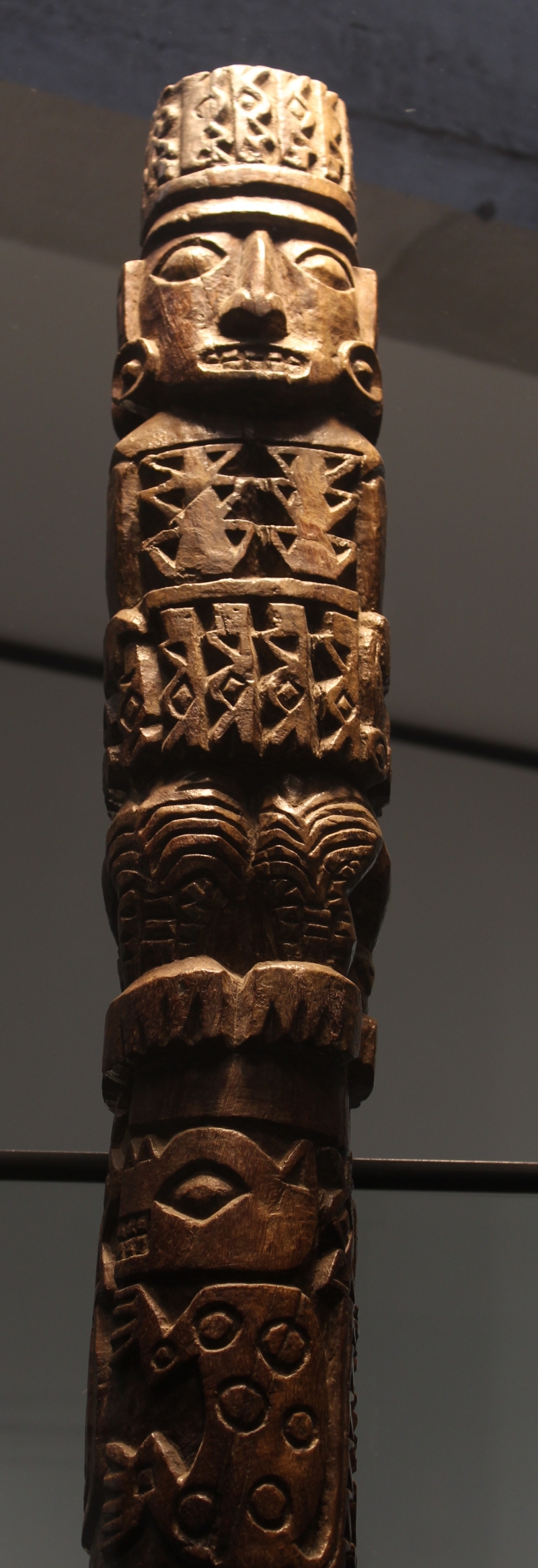
Also called *The god of staves and rods, he is a divinity of heaven that encompasses the Andean idea of ​​a general "creator god", which would originate from the Caral culture (3100 BC), he is also a central figure of the Puerta del Sol de Tiahuanaco, later venerated as the supreme god within the Inca Empire. He appears as the creator of the world, the sun, and the moon.

He is also credited with creating the "Kamaqen", the substance from which all things that exist in the universe originate. According to the chronicles, Huiracocha "was always here", however, after creating the world, he was "born" from the depths of Lake Titicaca on the shores of the island of the sun.


Image of the God Huiracocha in the Puerta del Sol de Tiahuanaco.

Viracocha created the universe, the sun, the moon, and the stars, time (commanding the sun to move across the sky), and civilization itself. Viracocha was worshiped as the god of the sun and storms. He was represented with the sun as a crown, with rays on his hands and tears that fell from his eyes in the form of rain. According to the Inca cosmogony, Viracocha can be assimilated to Saturn, the "old god", the maker of time, or "deus faber" (maker god), corresponding to the visible planet with the longest revolution around the sun.

*The God of the staffs, also known as the God of the rods, is an important deity in Andean cultures. Usually, he is depicted holding a staff in each hand, with fanged teeth and extended legs and claws, the other characteristics of him are unknown, although he is often depicted with snakes on his headdress or clothing. He is known as Viracocha in the Inca religion.

The oldest known representation of the God of the Rods was found in 2003 in some broken gourd fragments at a burial site in the Pativilca river valley (Norte Chico region) and the carbon dates back to 2250 BC. This makes it the oldest image of a god found in the Americas.


In Inca mythology, Huiracocha (in Quechua, Wiraqucha) was the invisible and abstract creator deity of the Andean worldview. It was considered as the original splendor (in Quechua, Illa Teqse or The Lord, Master of the World. Actually, it was the first divinity of the ancient Tiahuanacos, who came from Lake Titicaca. It emerged from the waters, created heaven and earth. The cult of the creator god was a concept of the abstract and the intellectual and was destined for the nobility. This god or "Huaca" apparently is also found in the iconography of the inhabitants of Caral, Chavín, and Wari.

"He made mankind by breathing into stones, but his first creation were brainless giants that displeased him. So, he destroyed them with a flood and made humans, beings who were better than the giants, from smaller stones. After creating them, they were scattered all over the world."

Juan de Betanzos.

Huiracocha has considered the most prominent among the Andean gods and his figure is the central one of "La Puerta del Sol de Tiwanaku" (the door of the Sun). It is possible that the great diffusion of it was due to the fact that the Catholic evangelizers were looking for a name to explain the concept of God to the indigenous people. In addition, they added other words to his name in order to emphasize his supreme quality, and in this way, the Quechua name of Apu Qun Tiksi Wiraqucha was formed.

He is believed to intervene in times of crisis but is also seen as a culture hero. The overlapping aspects in the upper pantheon consisting of Wiracocha, Punchao, Inti, and Illapa, could be derived from a single entity of the god of the sky and the storm. Sometimes the aspects have enough differences to worship them in a separate way.

In legend, he had a son, Inti, and two daughters, Mama Killa and Pachamama. In this legend, he destroyed the people around Lake Titicaca with a Great Flood called Unu Pachakutiq, which lasted 60 days and 60 nights, saving two to bring civilization to the rest of the world. These two beings are Manco Cápac, son of Inti (sometimes taken as the son of Viracocha), whose name means "splendid foundation", and Mama Uqllu, which means "mother fertility". These two founded the Inca civilization carrying a golden staff, called 'tapac-yauri'. In another legend, he was the father of the first eight civilized humans. In some stories, he has a wife named Mama Qucha.

Viracocha eventually disappeared across the Pacific Ocean (by walking on the water), and never returned. He wandered the earth disguised as a beggar, teaching his new creations the basics of civilization, as well as working numerous miracles. Many, however, refused to follow his teachings, returning into warfare and delinquency; Viracocha wept when he saw the plight of the creatures he had created.

“Various chronicles and myths describe Huiracocha as "the Maker," a distant and powerful god, but others speak about the appearance of the "mythical hero" and his adventures and pilgrimages.”
Antoinette Molinié-Fioravanti. "The Return of Viracocha."


According to the chronicler Pedro Sarmiento de Gamboa:

In the story of the explorer and historian Pedro Sarmiento de Gamboa, there are several descriptions of the creation of the world by Wiracocha. In the beginning, there is one called Wiracocha Pachayachachic. After creating the dark world, giant men are born. When these giants rebel and disobey his orders, Wiracocha Pachayachachic turns them to stone and causes a giant flood that covers the land.

Some of the nations, besides Cuzco, say that some people survived. In the fable of the second age, Wiracocha Pachayachachic saves three people, one of whom is named Taguapácac, and takes his new servants to a lake in Collao and Titicaca Island. He creates the moon, the sun, and the stars. When Taguapaca disobeys him, he is dragged to the bottom of the lake and transformed into a statue of salt. Afterward, the two servants took two different roads, one through the mountain range to the southern sea and the other through the Andes. Wiracocha takes the path among his servants. As they walk, they populate the earth and create the Andean nations. When Wiracocha arrives in the Charcas region, the people there try to kill him. He causes a fire to fall from the sky and many die. Wiracocha extinguishes the fire with his staff, and then the people worship him.

Sarmiento de Gamboa also describes that there are other stories about the creation of Wiracocha. Another says that Wiracocha was created near Titicaca and then he made men and giants in his likeness to populate the earth. They all have the same mother tongue, but after a while, they cannot communicate. After creating the world and people, Wiracocha continues his journey to perform miracles and instruct his servants.


According to the chronicler Juan de Betanzos:

The story of Juan de Betanzos is very similar to the myth of Pedro Sarmiento de Gamboa. Huiracocha emerges from Lake Titicaca and creates a race of man. But his creatures enrage him and then he transforms them to stone. Then he creates the sun, the stars, and the moon. Again, he makes men and creates the various provinces of Peru. He forms different lineages of humanity and gives each group a different clothing, language, song, agricultural system, and religion. He sends some men to the mountains, the rivers, and the caves. He orders two of the men to take a specific route to populate the earth. They take the same path as the servants in Pedro Sarmiento de Gamboa's story.

Huiracocha takes the Camino Real that goes to the mountains, towards a region called Caxamalca. He meets a group of people who don't recognize him and then they try to kill him. Huiracocha causes fire to fall from the sky and therefore people are afraid of dying. He tells them that he is their God, the creator, and they begin to worship him. He continues his journey, arriving in Cusco and joining the two men he sent earlier. Together they disappear over the sea.

According to the vision of the traditional Andean chronicle:
Huarochirí manuscript:

The identity of Huiracocha is combined with that of the god Cuniraya in the first chapter of the Huarochirí Manuscript. The addition of the name Huiracocha to worship that idol shows that he was invoked and respected.

The myth that follows explains the exploits of Cuniraya Viracocha and the way he deceives the Huaca Cavillaca: All the huacos wanted her, but she had never slept with any of them. One day, Cuniraya Huiracocha transformed into a bird and planted her male germ in a fruit. Cavillaca ate the fruit and became pregnant without having had sexual intercourse. When she tried to identify the father of her son, Cuniraya Wiracocha appeared as a poor beggar and tried to get her son back. Cavillaca did not believe him and ran out to sea, where she and her son were transformed into islands. Cuniraya Wiracocha tried to find her and asked several animals for help, but she was too late. Upon reaching the sea, she raped the youngest daughter of Pachacamac, another deity. When her mother tried to punish him, he ran away from her. Wandering the land, Wiracocha is known to deceive men.


The White God of the Incas / The arrival of the Spaniards:

The first Spanish chroniclers of the 16th century did not mention any identification with Viracocha. The first to do so was Pedro Cieza de León two decades after the fall of the Inca Empire. Pedro Cieza de León describes Huiracocha as "a white man with a grown body." Similar accounts by Spanish chroniclers claim that Huiracocha had the appearance of a European.

". . . that when asking the Indians what figure this Viracocha had when the ancients saw him there, according to what they had news about it and they told me that he was a tall man with a body and that he had a white garment that gave him to the feet, and that this garment was tight, He had short hair and a crown made on his head in the manner of a priest and was unclothed, and who carried in his hands a certain thing that seems to them today like these breviaries that the priests carried in their hands. . . He asked them what the name of the person in whose place that stone was placed5, and they told me that his name is Con TicI Viracocha Pachaya-chachic, which means in their language, God Maker of the world."

~ Suma y narración de los incas, 1551.


Pedro Sarmiento de Gamboa relates that Huiracocha "was a man of medium height, white and dressed in a white garment like a maiden girded by the body, and he had a staff and a book in his hands."

Juan de Betanzos describes him as “a tall man with a body and a white garment that gave him down to the feet that he wore tight, and that he had short hair and a crown made on his head like a priest... he had something in his hands that seems to them today like these breviaries that the priests carried in their hands”.

Titu Cusi Yupanqui Inca describes the red beards of the Spanish, the animals with silver horseshoes, the written language, and the noise of their arquebuses that connects them with the god of Thunder, Illapa. He then supposes that they were sent by Ticsi Wiracocha. With the discovery that the Spanish were mortal, Titu Cusi reveals that they were commanded by the devil.

Arguments that support these claims include:

  • The Spanish came from the sea, in the way that Huiracocha and his servants left according to examples in mythology. Huiracocha has a maritime origin.
  • According to Fioravanti, the direction of the Spanish path, which begins at sea and goes from north to south, is the inverse of the direction that Huiracocha and his servants (or his children in some versions) took.
  • According to Garcilaso de la Vega, Inca Huiracocha, the leader of the Inca people who had this title of Huiracocha as a symbol of their power and relationship with the highest god, delivered a prophecy in which it was declared that one day the Incas would lose their "idolatry and his empire ”at the hands of a people from a distant land.

Other uses of this same name and title:

  • Wiraqocha: Supreme God of Tawantinsuyana mythology, represented by a white character with long beards.
  • Wiracocha or wiraqucha: God the Inca natives worshiped; and from there, by divine reason, they called the Spaniard's children of that God.
  • Wiraqucha is the creator and civilizing god of the Andean world. Spaniards who came to Peru, who received this name, believing them emissaries of the main divinity.
  • Huiracocha or wiraqucha: an acculturated term that designated the Spanish. Huiracocha, the southern deity assimilated by the Incas and/or Spaniards to the other Andean cultural heroes, probably for purposes of spiritual subjugation.

Sources:
  1. Pedro Cienza de León, El señorío de los incas, Lima: Editorial Universo S. A., 1973.
  2. Pedro Sarmiento de Gamboa, Historia de los incas, segunda parte de la Historia Indica, Buenos Aires: Emecé Editores, 1943.
  3. Juan Diez de Betanzos, Suma y na­rración de los incas, Madrid: Marcos Ji­ménez de la Espada, Imprenta de Ma­nuel G. Hernández, 1880.
  4. Juan de Santa Cruz Pachacutl Yamqul, Relación de antigüedades des­te Rey no del Pirú, en Tres relaciones de antigüedades peruanas, Asunción del Paraguay: Editorial Guaranla, 1950.


Tuesday, July 27, 2021

Red flags and Leadership in your Community (video)


 Avoid that:

• Self idealization, people who can't stop talking and talking about themselves, and about how amazing and successful they are, just because they need to sell you their amazing story. • People who drowned themselves in those self-glorifying stories of unlimited power, awesomeness, brilliance, and fake community. • Hero/messiah complex. • Sense of entitlement. • Guilty or shame they try (so hard) to make you feel for not being part of their group. • Grandiose sense of self-importance and that fantastic-fantasy world that they create to support their delusions of grandeur.

Monday, July 19, 2021

About the Gorgon.


And don't forget, that hot night when Poseidon came trying to possess the beauty of the priestess beauty at all costs.

And she resisted seeking at all costs to honor her vows of purity and chastity, and he did not care.

Then Poseidon, believing himself entitled to do so, began the persecution of the priestess caste in that temple of her own niece, the wisest Athena of Olympus.

She ran and hid terrified, but Poseidon pursued her inexhaustibly, found her, undressed her, abused her, bite her, and kissed her on her lips.

Once his whim was over, Poseidon left for the waters where her nymphs awaited him, and then Athena arrived, who found the priestess lying on the ground, naked and tired.

Athena ignored all her excuses and mercilessly cursed Meduza, she threw her out of the temple that was her only home and the only thing she knew.

From pain and sadness, her teeth became sharp fangs, her hair fell and in their place grew dancing serpents that bite day and night her skin and tore her soul, from her feet grew long hoofs and from her hand's disgusting claws, her eyes turned red as blood because of the constant and painful crying, and the panic she caused in the men who saw her approach was such that they were petrified in her presence.

And without the strength to want to continue living, she crawled to the shores of the sea, where she found other two gorgons like her who would now be her sisters.

And they three would be feared by men because they could not rest to the murmur of the nightly wailing of the Gorgons.

It was then a demigod sent to assassinate the gorgon, who fleeing from the fury of men would have taken refuge in the darkest caves in the deepest mountains of a distant island.

And once again ignoring her desires for solitude, it would now be Perseus who would initiate the search, he reached where the gorgon was hiding, fleeing from gods and treacherous men and goddesses.

And he cut off her head to carry it on a shield and use it as a trophy.

And for the next thousands of years we keep repeating the cycle of turning the victim of abuse into the villain, we throw them away and isolate them from the world, and then for remaining too isolated we go against them to end their world, because this "villain", this "monster" that we ourselves create, represents everything that we hate, and many times, everything that we are.

And for the next several thousand years, Perseus was worshiped as a hero, carrying the head of a victim whose only mistake was not being able to hide from the ocean god in a place that she considered sacred.


The tragedy and the monster.

© All rights reserved, 2016, Elhoim Leafar.


Saturday, July 17, 2021

Why The Seven Lucky Gods in my book?

Why did I add “The Seven Lucky Gods” in my book Manifestation Magic?

Welcome back to my virtual space, I'm Elhoim, and here is a very long post to read, enjoy.


If you have already purchased my new book "Manifestation Magic: 21 Rituals, Spells, and Amulets for Abundance, Prosperity, and Wealth" you will have noticed that one of the most curious chapters is dedicated to mentioning and briefly describing a mixed list of divinities of luck and good fortune of various origins, so that nobody feels omitted (regardless of their religious path and preference), such as the fact that the Goddesses & Gods of good fortune (mostly) act in various religions without the need or intervention of initiatory processes, blessing all their believers equally and without exceptions, in addition, I have a personal belief that their names mentioned out loud act as mantras that bring good fortune and joy to all those who follow them. 

Obviously, the space in the books is certainly limited, so having a blog allows me to expand the content a little more in an accessible way for everyone, although the section on the seven gods of luck is quite short, here you have the complementary information that you might need.

If you have not yet purchased and read "Manifestation Magic", sorry for ruining the surprise for you, lol, but you still have time to find my book in your favorite store, by clicking here and here.

Why the Seven Lucky Gods? The seven gods of good fortune are well known for their “Japanese origin”, their related imagery is available in all kinds of art forms, paintings, sculptures, and statuettes in shops and restaurants around the world, in fact, my first contact. with the gods of fortune, it was through the popular and charming "Hotei" in a Chinese food place in my native Venezuela, usually, Hotei is confused with Buddha, and the reason why there is so much confusion around the Buddha image, because It is common to find pictures, paintings, and statues of Hotei in a variety of Asian food restaurants, where his image is related to a good omen of joy, good fortune, and financial abundance. 

The seven gods of fortune entirely represent the cycle of evolution and consolidation of the pagan gods in multiple cults; A recurring character is capable of working certain wonders and "miracles", is venerated in life and after death, and is remembered and venerated as a divinity, time and followers do the rest, turning the character into a legend, the legend into a myth, and many times in a divinity capable of granting all kinds of wishes to mortals from beyond. The most interesting topic about the seven gods of fortune is their origin and number (seven or eight), which I will tell you about below.


Their Origin.
(The following descriptions (largely) come from the book "The seven lucky gods of Japan" by Reiko Chiba. The most complete book on the subject, and also the one with the clearest references.)

“It is known that these deities mostly have their origins as ancient gods of fortune from religions popular in Japan: from Mahayana Buddhism (Benzaiten, Bishamonten, Daikokuten) which came to Japan from China but originated in India, and from Chinese Taoism (Fukurokuju, Hotei, Jurojin); except for one (Ebisu) who has a native Japanese ancestry.

These gods have been recognized as such for over a thousand years. In the beginning, these gods were worshiped by merchants as the first two (Ebisu and Daikokuten) were gods of business and trade.”
~ Reiko Chiba.


Gods of Mahayana Buddhism (India)

Benzaiten
Benzaiten (弁才天 or 弁財天) (also known as Benten) is a Japanese Buddhist goddess who originated from the Hindu goddess Saraswati. Her origin is found in Hinduism, as she comes from the Hindu goddess Saraswati. She is the only female Fukujin in the modern grouping. When she was adapted from Buddhism, she took the attributes of financial fortune, talent, beauty, and music.

She is represented as a smart, beautiful woman with all the aforementioned attributes. She carries a biwa, a Japanese traditional lute-like instrument, and is normally accompanied by a white snake. She is the patron of artists, writers, dancers, and geisha, among others.

Bishamonten or Vaiśravaṇa
Bishamonten's (毘沙門天) origins can be traced back to Hinduism, but he has been adopted into Japanese culture. He comes from the Hindu god Kubera and is also known by the name "Vaisravana".

He is the god of fortune in war and battles, also associated with authority and dignity. He is the protector of those who follow the rules and behaves appropriately. As the patron of fighters, he is represented dressed in armor and a helmet, carrying a pagoda in his left hand. He also acts as the protector of holy sites and important places and holds a spear in his right hand to fight against the evil spirits. He is usually depicted in illustrations with a hoop of fire.

Under his incarnation as Vaiśravaṇa is one of the “Four Heavenly Kings”, and is considered an important figure in Buddhism.

In the Pāli Canon of Theravāda Buddhism, Vaiśravaṇa is called Vessavaṇa. Vessavaṇa is one of the Cāturmahārājika deva or "Four Great Heavenly Kings", each of whom rules over a specific direction. Vessavaṇa's realm is the northern quadrant of the world, including the land of Uttarakuru. According to some suttas, he takes his name from a region there called Visāṇa; he also has a city there called Ālakamandā which is a byword for wealth. Vessavaṇa governs the yakshas, beings with nature between 'fairy' and 'ogre'.

Daikokuten
Daikokuten (大黒天) is a syncretic Japanese deity of fortune and wealth. Daikokuten originated from Mahākāla (a protector deity), the Buddhist version of the deity Shiva (“The Auspicious One” and “The Great One”) in Hinduism, conflated with the native Shinto god Ōkuninushi (the head of the Gods of the Earth and the primordial Ruler of Earth).

Is the god of commerce and prosperity, and he is sometimes considered the patron of cooks, farmers and bankers, and a protector of crops. He is also considered a demon hunter, the legend says that the god Daikokuten hung a sacred talisman on the branch of a tree in his garden and, by using this as a trap, he was able to catch a demon.

This god is characterized by his smile, by his short legs, and by the hat on his head. He is usually depicted with a bag full of valuable objects. Daikokuten's popular imagery originated as a syncretic conflation of the Buddhist death deity Mahākāla with the Shinto deity Ōkuninushi.


Gods of Chinese Taoism

Fukurokuju
The god Fukurokuju (福禄寿) from China used to be a hermit during the Chinese Song dynasty, distinguished for being a reincarnation of the Taoist god Hsuan-wu. It is said that during his human incarnation, he was a sennin; an immortal who could exist without eating food.

He is the god of wisdom, luck, longevity, wealth, and happiness. This god receives certain credits, such as being one of the Chinese philosophers who could live without eating (breatharian). Moreover, *he is the only “lucky god” who was said to have the ability to resurrect the dead. Fukurokuju is characterized by the size of his head, being almost as large as the size of his whole body, and is represented wearing traditional Chinese costumes. He normally carries a cane in one hand and in the other a scroll with writings about the world, he is usually accompanied by a turtle, a crow, or a deer, animals that are frequently used in Japan to symbolize a long life.

It has been theorized that he is Japanese assimilation of the Chinese Three Star Gods (Fu Lu Shou) embodied in one deity. Most related in appearance to the Chinese star god Shou, he is the God of wisdom and longevity. According to some, before attaining divinity, he was a Chinese hermit of the Song Dynasty and a reincarnation of the Taoist Deity, Xuantian Shangdi. It is said that during his human incarnation, he was a sennin; an immortal who could exist without eating food.

*He is the only member of the Seven Lucky Gods credited with the ability to resurrect the dead.

Hotei or Budai
Hotei (布袋) is the god of fortune, guardian of children, patron of diviners and barmen, and also the god of popularity. He is a historical Chinese monk who is often venerated as Maitreya Buddha in Chan Buddhism. He also came to be venerated in Vietnam, Korea, and Japan.

Hotei's original Chinese name was Kaishi, and according to legend, he died in March 916. The Japanese began to believe in Hotei during the Edo era. The reason why the Japanese have such great respect for this god comes from a legend that says that, before Zen Buddhism arrived in Japan, an alternative Buddhist thought was extended by a priest of dubious aesthetic, who actually was a manifestation of Miroku. Miroku was the patron of those who could not be saved by the beliefs of Buddha, and Hotei was later perceived and accepted by the Japanese as a second Miroku.

He is depicted as a fat, smiling, bald man with a curly mustache. Hotei was a Zen priest, but his appearance and some of his actions were against their moral code: his appearance made him look like quite a mischievous person and he had no fixed place to sleep.

He always appears half-naked, as his clothes are not wide enough to cover his enormous belly. He blessed the Chinese, and they nicknamed him "Cho-Tei-Shi" or "Ho-Tei-Shi", which means ‘bag of old clothes.

He carries a bag on his shoulders that is loaded with fortunes for those who believe in his virtues. His name literally means "cloth sack", and refers to the bag that he is conventionally depicted as carrying as he wanders aimlessly. His jolly nature, humorous personality, and eccentric lifestyle distinguish him from most Buddhist masters or figures. He is almost always shown smiling or laughing, hence his nickname in Chinese, the "Laughing Buddha".

Hotei's traits and virtue are contentment, magnanimity, and happiness.

Jurojin
Considered the incarnation of the southern pole star (南極星 "nankyokusei"), Juroujin (寿老人) is the great god of the elderly and of longevity in Japanese Buddhist mythology.

Jurōjin originated from the Chinese Taoist god, the Old Man of the South Pole. He is known as the immortal of the Northern Song dynasty (960–1127) and may have been a historical figure of the period. Jurōjin is identified as the personification of the Southern Polar Star.

It is said that the legendary Juroujin is based on a real person who lived in ancient times. He was approximately 1.82 meters tall with a very long head. Besides his distinctive skull, he is represented with a long white beard, riding a deer, and is often also accompanied by a 1500-year-old crane and a tortoise, as symbols of his affinity with long lives. In addition, he is usually represented under a peach tree, as the fruit of this tree is considered, by Chinese Taoism, as able to prolong life. In his hand, he holds a cane and a book or a scroll. The wisdom of the world remains written in its pages. Jurojin enjoys rice and wine and is a very cheerful figure.


The Japanese One

Ebisu / Webisu / Hiruko
Ebisu Is the Japanese god of fishermen and luck. He is one of the Seven Gods of Fortune (七福神, Shichifukujin), and the only one of the seven to originate purely from Japan without any Buddhist or Taoist influence.

From the period of the gods Izanami and Izanagi, Ebisu (恵比寿) is the only one whose origins are purely Japanese. He is the god of prosperity and wealth in business, and of plenitude and abundance in crops, cereals, and food in general. He is the patron of fishermen and therefore is represented with fishermen's costumes such as a typical hat, a fishing rod in his right hand, and a fish that can be either a carp, a hake, a codfish or sea bass, or any large fish, in general, that symbolize abundance in meals (such as a feast or banquet). It is now common to see his figure in restaurants where fish is served in great quantities or in household kitchens.

In medieval times, Ebisu's origin came to be tied together with Hiruko, the first child of Izanagi and Izanami (the creator deity, and the goddess of creation and death), born deaf and without bones due to his mother's transgression during the marriage ritual. Hiruko struggled to survive but, as he could not stand, he was cast into the sea in a boat of reeds before his third birthday.

The weak child overcame many hardships, grew legs (and, presumably, the rest of his skeletal structure) at the age of three, and became the god Ebisu. He remains slightly crippled and deaf, but always cheerful and auspicious.

Ebisu's festival is celebrated on the twentieth day of the tenth month, Kannazuki (the month without gods). While the other myriad members of the Japanese pantheon gather at “The Grand Shrine of Izumo” (the Big Temple in the Heavens), Ebisu does not hear the summons due to his deafness, and because of this, he is still available for worship.


The (very powerful) Eight One

Kisshōten ("Auspicious Heavens") or Kisshoutennyo.
It is the eighth deity, many times omitted for having been introduced later, although in some Buddhist and Taoist currents it simply takes the place of Fukurokuju.

Is a Fukujin (Japanese) Goddess, and is adapted via Buddhism from the Hindu goddess Lakshmi. Kisshōten has the traits of beauty, happiness, and fertility. In the 1783 edition of the Butsuzōzui compendium, Kichijōten replaced Fukurokuju as one of the seven Fukujin.

Kichijōten's iconography is distinguished from the other Fukujin goddesses by the Nyoihōju gem (如意宝珠) in her hand (s a wish-fulfilling jewel within both Hindu and Buddhist traditions).


with love, Elo.

Check other recent posts: 
  • Here comes the Sun, here comes the light (Lughnasadh 2021) CLICK HERE 
  • Witchsfest USA 2021 Post-Covid times? CLICK HERE
  • Trauma Survivors and the Broken Vessel. CLICK HERE
  • Manifestation & Magic (free youtube classes) I & II. CLICK HERE


Bibliography
  • Elhoim Leafar (2021). "Manifestation Magic: 21 Rituals, Spells, and Amulets for Abundance, Prosperity, and Wealth". Weiser Books.
  • Chiba, Reiko (28 August 2012). Seven Lucky Gods of Japan. Tuttle Publishing.
  • Garcia, Hector (2012). Geek in Japan: Discovering the Land of Manga, Anime, Zen, and the Tea Ceremony. Tuttle Publishing.
  • Faure, Bernard (2015). The Fluid Pantheon: Gods of Medieval Japan, Volume 1.
  • Faure, Bernard (2015). Protectors and Predators: Gods of Medieval Japan, Volume 2. University of Hawaii Press.
  • Ashkenazi, Michael (2003). Handbook of Japanese Mythology, Santa Barbara, California:
  • Davis, F. Hadland (1912). Myths and Legends of Japan
  • Catherine Ludvik (2001), From Sarasvati to Benzaiten, Ph.D. Thesis, University of Toronto, National Library of Canada.
  • Leighton, Taigen Dan (1998). Bodhisattva Archetypes: Classic Buddhist Guides to Awakening and Their Modern Expression. New York: Penguin Arkana.
  • Finegan, Jack (1989). An Archaeological History of Religions of Indian Asia. Paragon House.Peterson, Christopher. "When Did the Buddha Become Fat?". Article for Psychology Today. Retrieved 1 November 2018. (Read the article here)
  • Seow (2002). Legend of the Laughing Buddha. Asiapac Books.
  • Levine, Gregory (2007). Awakenings: Zen Figure Painting in Medieval Japan. Japan Society.

July 2026

July Month of Abundance, in the Midst of the Chaos. 2026. Yes, a couple of days later. Click here to read JULY (2025) Month of Abundance. Th...