Thursday, June 6, 2024

Gatekeepers & The Cult of Personalities in the Craft.

The Cult of Personalities vs. the Craft


Hey you! In 2021, I wrote another post, Self-Initiations and New Traditions, which became one of the most popular posts on this blog. Thinking recently about it, I wrote this other one as a follow-up to the conversation.
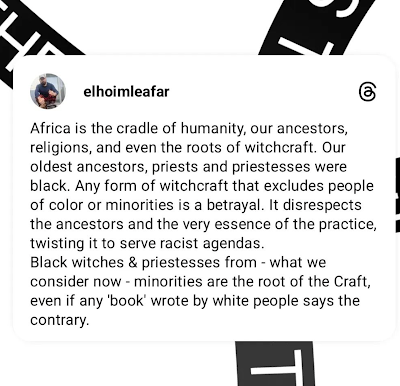
The kind of posts I made that make every racist get mad.


Let's talk about the elephant in the coven room, the state of witchcraft covens today. Here's the thing: Gatekeepers aren't the enemy. They're the guardians who ensure the craft's sanctity stays in the right hands. It's the performance of gatekeeping that grates. Those public tantrums thrown by those denied entry? They're precisely why we need discernment. 

A gatekeeper is a loyal, trained protector of the secrets of a path, a guardian of the realm's doors. They are the assigned guardians of the craft in every path, like a mother protecting the most precious thing she has, her children, against bullies who ask how to cause them any damage.

A gatekeeper is the last resourceful tool to protect the real Craft. Especially in these times where kids read half a witchcraft book and half a Wikipedia article and end up making a 60-to-90-second TikTok video about the rituals that black people and descendants of slaves have done. To protect for decades, they have performed these rituals to protect their descendants against the oppressive hands of the colonizers and slavers. These are taken, dismantled, deconstructed, criticized, and taken out of context in a 60-to 90-second animated video with a pop song in the background.

To know more about this first topic, you can CLICK HERE to read my post 'Why are Gatekeepers so Important in Witchcraft'.


Ego-driving Coven.

The real problem lies deeper, festering in many established traditions' hearts. It's the insidious disease of ego-driven competition. These traditions are locked in a never-ending contest for relevance, a desperate scramble for external validation. Instead of nurturing new witches, they become talent scouts for ego-massaging minions. Dissenting voices are immediately silenced, and individuality 'should be' extinguished. 

The result? Covens morph into personality cults. Blind obedience reigns supreme, and critical thought is banished. The deification of the leader replaces devotion to the pantheon. Coven gatherings become echo chambers devoid of genuine exploration.

While I may not like the term "tradition" slapped on overnight creations, the need for fresh paths is undeniable. The spirit of the craft craves evolution, just like everything else in the cosmos. 

But here's my bone to pick: using the word "tradition" is a slap in the face to those who've spent generations safeguarding the craft. It's a lie peddled to starry-eyed seekers. This isn't some ancient lineage passed down through whispered secrets. It's a soulless, mass-produced brand of witchcraft churned out by entrepreneurial opportunists. Forget nights of practice under the moon; this is "Witchcraft for Dummies" packaged for profit.

If my husband, who does not practice witchcraft as regularly as I do and does not belong to any coven, decided to participate and create with me our own path (Another unnecessary modern tradition of witchcraft), I am not saying that we are going to do it. The correct thing would be to say, "This new path that we have created together is based on X, Y, and Z". 

A typical red flag that is easy to identify when people just want to create a cult is when they strive to make it as relevant as possible. As if my husband and I said, "his ten years of practice, and my 30 years of practice, added to the years of practice of our first members equals more than 100 years of experience", which is a Big No!. We do not have a combined 100 years of experience; experience is not something you add and multiply like this as if it were ounces of water that you add to a jar. 

These "organized paths" often devolve into cults fueled by the leader's insatiable ego. Red flags abound,  the biggest being the overnight creation masquerading as a legacy. These are manufactured mysteries, not the organic product of generations of practice.


The Real New Paths

However, let's paint all new paths with a different brush. Those born from genuine desire, from a yearning for something more profound, more magical, these paths are the antidote. They won't seek validation from the old guard. They'll cultivate their own mysteries and guardians if they're rooted in authentic power and connection. The cycle will repeat, and that's okay. The craft, like nature itself, thrives on change.

So, let's move beyond the old and new cult mentality. Let's cultivate a space for genuine exploration, fostering unique voices. Let the craft evolve organically; perhaps, we'll rediscover the magic that binds us all.

Now, let's delve deeper into this rabbit hole. We exposed the ego wars and the manufactured mysteries, but the question remains: What does a healthy coven look like?. Is it some utopian ideal, or can we cultivate it here and now?

Here's my personal vision. I will call this the 'Elhoim's impossible silly vision' (because I can...).

A coven built on the foundation of mutual respect.  A coven where diverse experiences and perspectives are not just tolerated but celebrated. Imagine a space where fiery debates coexist with shared rituals, where questioning authority is seen as a sign of a curious mind, not a rebellious spirit.

This coven wouldn't be a pressure cooker for conformity. It would be a hotbed* of creativity, encouraging each member to explore their unique magical path within the coven's broader framework. Think of it as a constellation, individual stars shining brightly, yet undeniably part of a larger, magnificent whole.

*I just learned the word hotbed days ago, and you can not imagine how excited I was to use it. Lol.

Forget about leaders who lord their knowledge over everyone. In this coven, we'd share what we know and help each other grow. We wouldn't be some drill sergeant barking orders but more like friends coaching each other on the magical journey. Picture this: coven leaders who see their role as keeping the magic alive, not snuffing it out with control. 

Magic shouldn't always be this dark, egocentric, highly academic-serious thing. We should be able to laugh together, share stories, and have fun with ourselves occasionally. When you try a new spell, it goes hilariously wrong? That's the kind of coven I dream of, one that celebrates every win, big or small, with roaring laughter and genuine camaraderie. 

This wouldn't be some exclusive club with velvet blue and black ropes and secret handshakes. This would be a welcoming space, open arms outstretched to anyone genuinely drawn to the craft. Imagine a coven that sees the spark in newcomers' eyes and offers guidance instead of constant judgment. A coven focused on making you a better, more capacited witch, but also a better and more responsible human being. 

This is a dream, a vision I have shimmering on the horizon. But that's what gets me fired up, you know? The chance to create something new, something that goes beyond the petty squabbles and ego trips that plague the witchy scene these days. 

So, let's be the change we want to see. Let's ditch the "this is the only way" mentality and build dynamic, inclusive, and overflowing with genuine magic covens. After all, the future of witchcraft isn't with self-proclaimed gatekeepers or narcissistic leaders. It's with the dreamers, creators, and folks who dare to break the mold and weave their unique brand of magic.

The Need for the New.

One of the biggest problems that I assume happened to people trying to join covens these days, or at least from my own experience just talking with people all the time, is that covens these days feel more like a judgmental space where you are going to sit to be bullied or dismissed, where you are going to get cut to fit, where probably the goddess or god of the pantheon drives you and call you to cause they see in you some authentic, powerful piece of magic that could be helpful in their tradition, and immediately you sit down you should be cut and transformed, not always into something bigger but into something smaller to fit, and not for the pantheon, but for the members who can not tolerate authenticity and power they can not control.

Although this has not been my personal experience in any other coven, it is expected that for some reason - perhaps because I try to be a sociable person - I end up in conversations with different people looking to associate or join with one coven or another, and their experiences end up being somewhat bitter and frustrating. And most of the time, it is due to the same reasons, this kinda ego-driven narcissistic god-complex from people trying to treat others in the most unkind way, dismissing all their true potential entirely just to not admit 'maybe our pantheon sent this person to teach us something, or to teach me something I should do better'.

And that's the thing with ego-driving people, they will never admit their mistakes or opportunities for change, and because of that, their traditions can quickly end at any moment, which again, they make about themselves, not rightly assuming 'Perhaps this is the time to change, to not let the secrets of tradition be lost in time', many times the ego-maniacal response of these people ends up being 'we will then be the last', because for them it is more important to let die the garden due to lack of water and changes in plant care, than admitting that a new gardener can bring a different and more practical experience and points of view.


Xxo, Elhoim Leafar. Author of 'Manifestation Magic' and 'Dream Witchery'.


Read also:
And Click Here to Grab a copy of my book Dream Witchery: Folk Magic, Recipes & Spells from South America for Witches & Brujas'

The Importance of Gatekeepers in Witchcraft. And why they are also not Important for You.

Gatekeepers in Witchcraft

(I was writing this one for a book in 2017, but in all honesty, it was too severe for my own work)


Hey, Witch, there is a very livid discussion about gatekeeping in witchcraft. And like everything in life, there are two sides. The side of those who have been formally trained, tested, and initiated into certain specific paths of witchcraft (Wicca, Santeria, Candomble, etc...) who have spent years studying these mysterious secrets and holding onto the secrets to pass them on to the next generation, who primarily support the concept of gatekeepers.

There exists an opposite side made by those who have yet to be formally trained and initiated. Because their only connection to these esoteric paths is through the internet and books, they can easily assume that 'outside of all meritocracy,' they should have equal access to these mysteries and secrets.

Gatekeeping in Witchcraft: A Necessary Evil?

The concept of gatekeeping in the metaphysical and witchcraft community is complex and often contentious. While many criticize it as exclusionary and elitist, gatekeeping plays a crucial role in safeguarding the sacredness and traditions of the craft.

Protecting the Sacred.

At its core, Witchcraft is a practice steeped in history, tradition, and often, secrecy. Many rituals and practices involve powerful energies and require understanding and respect to wield them safely and responsibly. Gatekeepers act as guardians of this knowledge, ensuring it doesn't fall into the wrong hands or is misused for malicious purposes.

Preventing Misappropriation.

The rise of social media has led to a surge of superficial engagement with witchcraft. Some individuals, driven by the desire for attention or profit, exploit the craft's aesthetics and symbolism without understanding its deeper meaning or respecting its traditions. Gatekeeping helps prevent the trivialization and commercialization of these sacred practices.

Maintaining Lineage and Authenticity.

Witchcraft traditions are often passed down through lineages and initiatory practices. Gatekeepers ensure that knowledge is transmitted responsibly and accurately, preserving the integrity and authenticity of the craft. They act as mentors and guides, helping newcomers navigate the complexities of the practice while safeguarding its core principles.

Understanding the Balance.

It's important to acknowledge that gatekeeping can sometimes be misused to create unnecessary barriers or perpetuate a sense of elitism. However, the core function of protecting the sacredness and traditions of the craft remains vital.

Finding the Right Approach.

The key lies in striking a balance between responsible gatekeeping and fostering inclusivity. This can be achieved through:

Mentorship and guidance.

Experienced practitioners can support newcomers by providing resources and guidance while ensuring they understand the responsibility of wielding magical power.

Discernment and assessment.

Gatekeeping shouldn't be about arbitrary exclusion but about assessing an individual's genuine interest, commitment, and respect for the craft.

Openness to diverse perspectives.

The witchcraft community should be open to diverse perspectives and experiences while still upholding core values and traditions.

By acknowledging the importance of gatekeeping while striving for a more inclusive and responsible approach, we can ensure that the sacredness and traditions of witchcraft are preserved for future generations.


The Pivotal Role of the Gatekeeper (What many people choose to conveniently forget)

The debate around gatekeeping in the witchcraft community highlights a crucial tension between inclusivity and the need to safeguard the craft's sacredness and traditions. While some see gatekeepers as elitist and exclusionary, their role is often misunderstood.

The Gatekeeper's Responsibilities;

Protecting the Sacred.
Gatekeepers are guardians of powerful knowledge and practices, ensuring they are not misused or exploited for malicious purposes.
Preserving Traditions.
They safeguard the integrity and authenticity of witchcraft lineages and practices, ensuring knowledge is transmitted accurately and responsibly.
Preventing Misappropriation.
They act as a barrier against the trivialization and commercialization of the craft, preventing superficial engagement and disrespectful appropriation.

Again:
Gatekeeping plays a pivotal role in ensuring the continued integrity and respect for witchcraft's sacredness. By balancing responsible gatekeeping and inclusivity, we can create a thriving community that preserves the traditions and empowers future practitioners.


Holiday Magickal Rituals

For the Holiday Season: 13 Magical Elements I Keep in Every Room to Activate Holiday Abundance The holiday season brings a profound shift in...